#CarrotDay
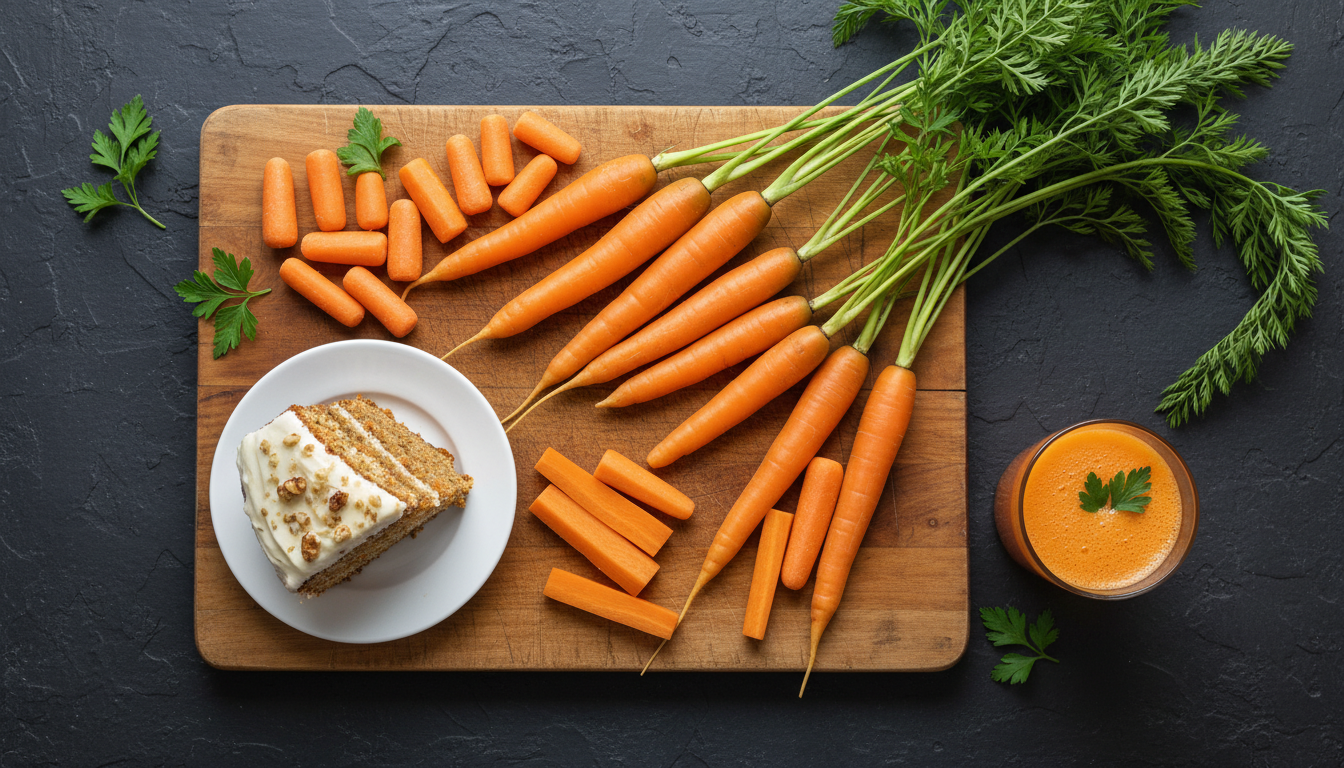
It's International Carrot Day, make your favorite carrot dish! (Another perfect excuse for cake?)
What Does #CarrotDay Mean?
International Carrot Day on April 4th celebrates one of the most popular vegetables in the world. Carrots weren't always orange - they were originally purple, red, and white until Dutch growers developed the orange variety in the 17th century. The day promotes healthy eating and creative carrot cooking.
How to Use #CarrotDay
Share a carrot recipe, fun carrot fact, or a photo of your garden harvest. Health and nutrition accounts can post about the benefits of carrots. The fun fact about carrots originally being purple always gets good engagement.
The Vegetable That Used to Be Purple
International Carrot Day lands on April 4th, and it comes with a fact that still surprises people: carrots were not originally orange. For most of their 5,000-year history, carrots came in purple, red, white, and yellow. The orange carrot that dominates grocery stores today is a relatively recent invention - the result of selective breeding by Dutch growers in the 16th and 17th centuries who cross-bred mutant strains of lighter-colored varieties until they landed on something sweeter, less bitter, and more resistant to pests.
There is a popular story that the Dutch bred orange carrots to honor William of Orange, who led the Dutch independence movement against Spain. Geneticists have largely debunked this. Orange carrot mutations first appeared during the Roman Empire era, and orange and purple carrots were both cultivated in medieval Spain by the 1300s - more than two centuries before William of Orange entered the picture. The Dutch were simply excellent farmers with the right climate. The political connection came after the carrot.
The holiday itself started in 2003 in Sweden, founded by carrot enthusiasts Annemarie and Johannes Lindner. By 2012, celebrations had spread to France, Italy, Russia, Japan, Australia, and the United Kingdom, with the World Carrot Museum foundation now hosting and promoting the event.
The Eyesight Myth and the Wartime Lie
Everyone has heard that carrots are good for your eyes. The truth is more specific than the claim. Carrots contain beta-carotene, which the body converts to vitamin A. If you are deficient in vitamin A - a condition that can cause night blindness - eating carrots will genuinely help restore your vision. But if you already get enough vitamin A, eating extra carrots will not give you superhuman eyesight. Your body just processes the excess.
The reason most people believe carrots dramatically improve vision traces back to a deliberate lie. During World War II, the Royal Air Force had a secret weapon: airborne interception radar that could detect enemy bombers before they crossed the English Channel. To hide this technology from the Germans, the British Ministry of Information ran a propaganda campaign claiming RAF pilots owed their extraordinary night vision to eating carrots. Fighter ace John Cunningham - nicknamed "Cat's Eyes" - shot down 20 enemy aircraft, 19 of them at night, and was held up as proof that carrots were behind his success. Government posters told civilians that carrots would "keep you healthy and help you to see" during blackouts.
The campaign served a second purpose. German blockades made imported foods scarce, but carrots grew easily in British gardens. Encouraging people to eat more of them made practical sense during rationing. The myth was so effective that most people still believe it more than 80 years later.
By the Numbers
Global carrot production hit 42 million metric tons in 2024, worth an estimated $21.3 billion. China dominates with 18 million tons, accounting for 43 percent of world production. Uzbekistan comes in second at 3.7 million tons (growing at 7.6 percent annually), followed by the United States and Russia at about 1.4 million tons each.
If you want to grow a record-breaker, you are chasing Joe Atherton of the United Kingdom, whose carrot measured 6.245 meters - that is 20 feet 5.86 inches - verified by Guinness World Records in September 2016 at the UK National Giant Vegetables Championship. The heaviest carrot on record weighed 10.17 kilograms (about 22 pounds), grown by Christopher Qualley of Otsego, Minnesota in 2017.
And those "baby carrots" at the supermarket? Most are not a separate variety. California farmer Mike Yurosek invented the concept in 1986 to reduce waste from misshapen full-sized carrots. The ugly ones get cut into two-inch sections and machine-abraded into the rounded shapes you see in snack bags. Today some companies do grow naturally smaller carrot varieties for the baby carrot market, but the original concept was just clever packaging of produce that would otherwise be thrown away.
Purple, Red, White, and Yellow - and Why Color Matters
Heirloom carrot varieties are making a comeback at farmers markets, and the different colors are not just decorative. Purple and red carrots contain anthocyanins - the same powerful antioxidants found in blueberries and red cabbage - delivering roughly nine times more polyphenol antioxidants than orange varieties. Research links anthocyanins to anti-inflammatory, anti-cancer, and cardiovascular benefits.
Orange carrots hold the highest total carotenoid content, with beta-carotene making up about 65 percent. Yellow carrots are rich in lutein, which accounts for almost half their carotenoids and is associated with eye and brain health. White carrots contain less pigment-based nutrition but still offer fiber, potassium, vitamin C, and manganese.
Even carrot tops are edible, despite a persistent myth that they are toxic. The greens taste somewhat bitter raw but work well as pesto, in soups, or sauteed. Blanching them in boiling water for a few minutes takes the edge off the bitterness. One cup of raw carrot greens provides vitamin A, vitamin C, vitamin K, calcium, and iron with zero fat and roughly 90 calories.
From Medieval Sweetener to Wartime Cake
Before sugar became widely affordable, carrots served as one of Europe's primary sweeteners. Arabic chefs used them this way as early as the 10th century, creating an Iraqi dessert called khabis al-jazar. A 1591 English recipe describes "pudding in a Carret root" made with shortening, cream, eggs, raisins, dates, and spices. In 1814, Antoine Beauvilliers - a former chef to Louis XVI - published his recipe for Gateau de Carottes in L'art du cuisinier, which became popular enough that competitors copied it verbatim.
Carrot cake as we know it owes its modern form to another period of scarcity. During World War II, British sugar rations dropped to 8 ounces per week, and home cooks turned to carrots for natural sweetness. The wartime revival stuck around, and by the 1960s someone had the genius idea of topping it with cream cheese frosting - creating the version most people would recognize today.
Related Hashtags
Posting for International Carrot Day? Check out these related tags: #VitaminCDay (also April 4th), #CaramelDay and #DeepDishPizzaDay on April 5th for more food content, #NationalPotatoChipDay for snack lovers, and #CheeseLoversDay for foodies. Browse more Friday hashtags for additional reach.
Quick Info
-
Hashtag#CarrotDay
-
When to PostApril 4th
-
Full GuideAvailable below
Related Hashtags
Find More Hashtags
Search across 830+ curated hashtags