#CaramelDay
Pick up your favorite caramel treat and celebrate this tasty day!
What Does #CaramelDay Mean?
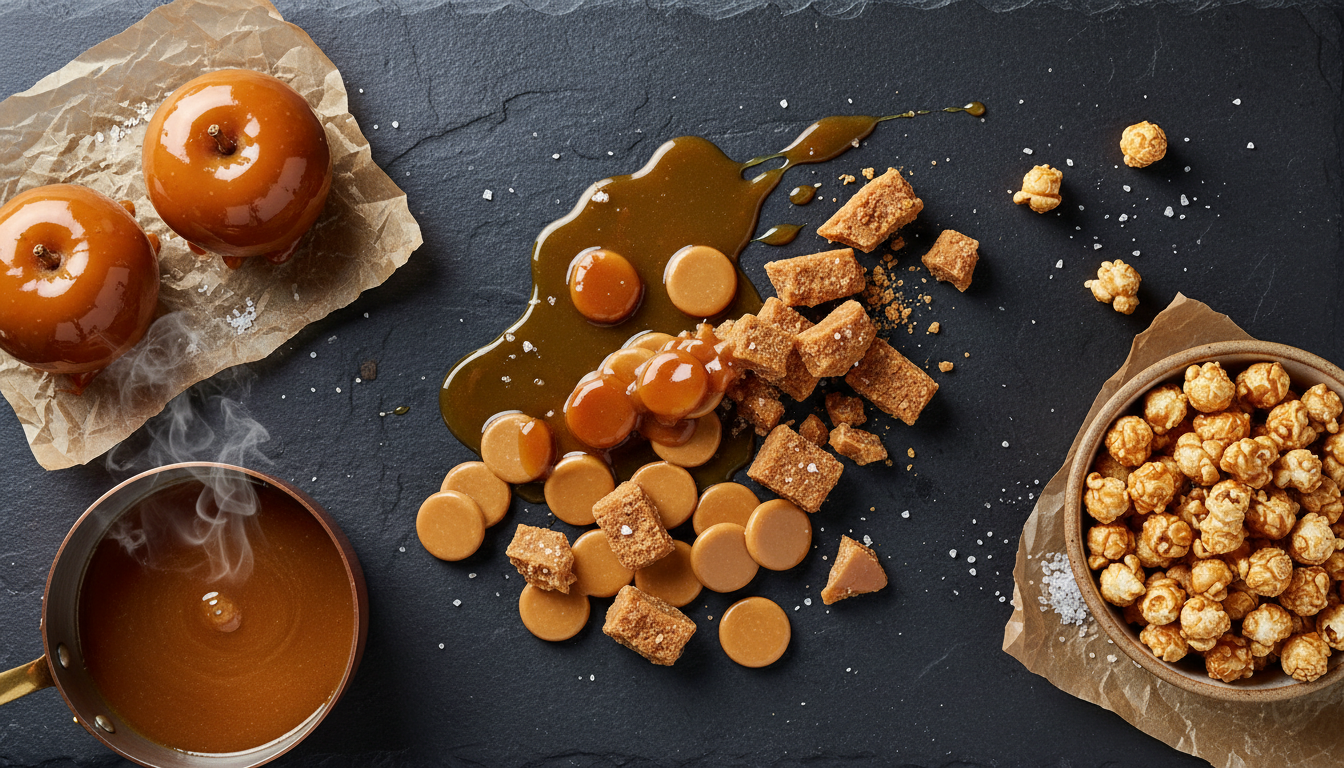
National Caramel Day on April 5th celebrates the sweet, buttery confection made by heating sugar. Caramel has been enjoyed since at least the 1700s, and it shows up everywhere - in candy, coffee drinks, ice cream, and sauces. The day-long debate about pronunciation (CAR-mel vs. CARE-a-mel) is half the fun.
How to Use #CaramelDay
Share your favorite caramel treat, recipe, or the shop where you get the best caramel. Coffee shops can promote their caramel drinks. And don't forget to weigh in on the great pronunciation debate - that question alone drives solid engagement.
The Sticky, Sweet Substance That Built an Empire
National Caramel Day falls on April 5th, and it celebrates one of the oldest confections still dominating candy aisles, coffee menus, and dessert plates worldwide. But caramel is more than a flavor. It is the product of a chemical reaction that humans stumbled onto roughly a thousand years ago and have been obsessing over ever since.
Around 1000 AD, Arab confectioners were boiling sugar and water into hard, crunchy sweets they called “kurat al milh” - sweet balls formed by crystallizing sugar in boiling water. The original use was not even culinary. Early sugar pastes were used for hair removal and beauty treatments. The leap from cosmetic goo to candy happened gradually, and the word “caramel” itself traces back through Spanish caramelo to Medieval Latin cannamellis - a mashup of canna (cane) and mellis (honey).
What Actually Happens in the Pan
Caramelization is not the same thing as the Maillard reaction, although people confuse them constantly. The Maillard reaction requires amino acids and kicks in around 280 to 330 degrees Fahrenheit. Caramelization is purely about sugar - no protein needed - and it does not start until you hit roughly 320 degrees Fahrenheit.
At that temperature, sucrose molecules begin breaking apart into glucose and fructose. Those fragments then lose water molecules and start recombining into hundreds of new compounds. The brown color comes from polymers called caramelans, caramelens, and caramelins. The flavor comes from a cascade of volatile molecules including diacetyl (the buttery one), maltol (the toasty one), and furanones (the sweet caramel aroma).
Here is the part that matters in a kitchen: the difference between soft caramel candy and hard caramel brittle is just a few degrees. Soft caramels are cooked to about 245 degrees Fahrenheit. Push past 300 and you get hard crack stage - the territory of lollipops and spun sugar decorations. The entire personality of the candy changes within a 60-degree window.
Milton Hershey Bet Everything on Caramel (Then Walked Away)
Before Milton Hershey became synonymous with chocolate, he was a caramel man. After failing at candy businesses in Philadelphia, Chicago, and New York, Hershey returned to Lancaster, Pennsylvania and founded the Lancaster Caramel Company in 1886. His secret was using fresh milk in the recipe, which gave his caramels a creamier texture than competitors.
The company became enormously successful. But Hershey had a hunch that chocolate had a bigger future. In 1900, he sold the entire Lancaster Caramel Company - the factory, the machinery, the recipes, the trademark - for one million dollars in cash. That is roughly 37 million dollars adjusted for inflation today. He kept only the chocolate-making equipment and used the proceeds to build a chocolate factory in a Pennsylvania cornfield that would eventually become Hershey, Pennsylvania.
The irony is thick. Caramel built the fortune that launched the world’s most famous chocolate company. And today, some of Hershey’s best-selling products - Milky Way, caramel-filled Kisses, Rolo - are caramel and chocolate together.
The Pronunciation War That Will Never End
No discussion of caramel is complete without addressing the argument. Is it CAR-mel or CARE-a-mel?
A Harvard Dialect Survey of over 11,000 people found the split almost perfectly even: 38 percent said two syllables, 37.66 percent said three. The geographic pattern is clear. Three-syllable pronunciations dominate New England, the Mid-Atlantic, and the South. Two-syllable versions own the Midwest and West Coast. British English speakers almost universally go with three syllables.
Merriam-Webster lists both as acceptable. Neither is wrong. But the debate itself has become a cultural phenomenon - food bloggers use it as engagement bait, teachers use it as a linguistics lesson, and every April 5th the argument resurfaces on social media with the predictability of a tidal chart.
For what it is worth, “Carmel” with no second A is technically only correct as a proper noun - it is a city in California and a mountain in Israel. The candy always has that second A in the spelling, even if your tongue skips it.
Related Hashtags
If you are celebrating National Caramel Day, check out these related hashtags:
- Deep Dish Pizza Day - also on April 5th
- Raisin and Spice Bar Day - another April food celebration
- Chocolate Mousse Day - for the dessert lovers
- National Chocolate Day - caramel’s favorite partner
- Coffee Cake Day - caramel drizzle optional
Quick Info
-
Hashtag#CaramelDay
-
When to PostApril 5th
-
Full GuideAvailable below
Related Hashtags
Find More Hashtags
Search across 830+ curated hashtags