#RaisinAndSpiceBar
That's right, there's a national day for this tasty confection. Have yourself a Raisin and Spice Bar, guilt-free.
What Does #RaisinAndSpiceBar Mean?
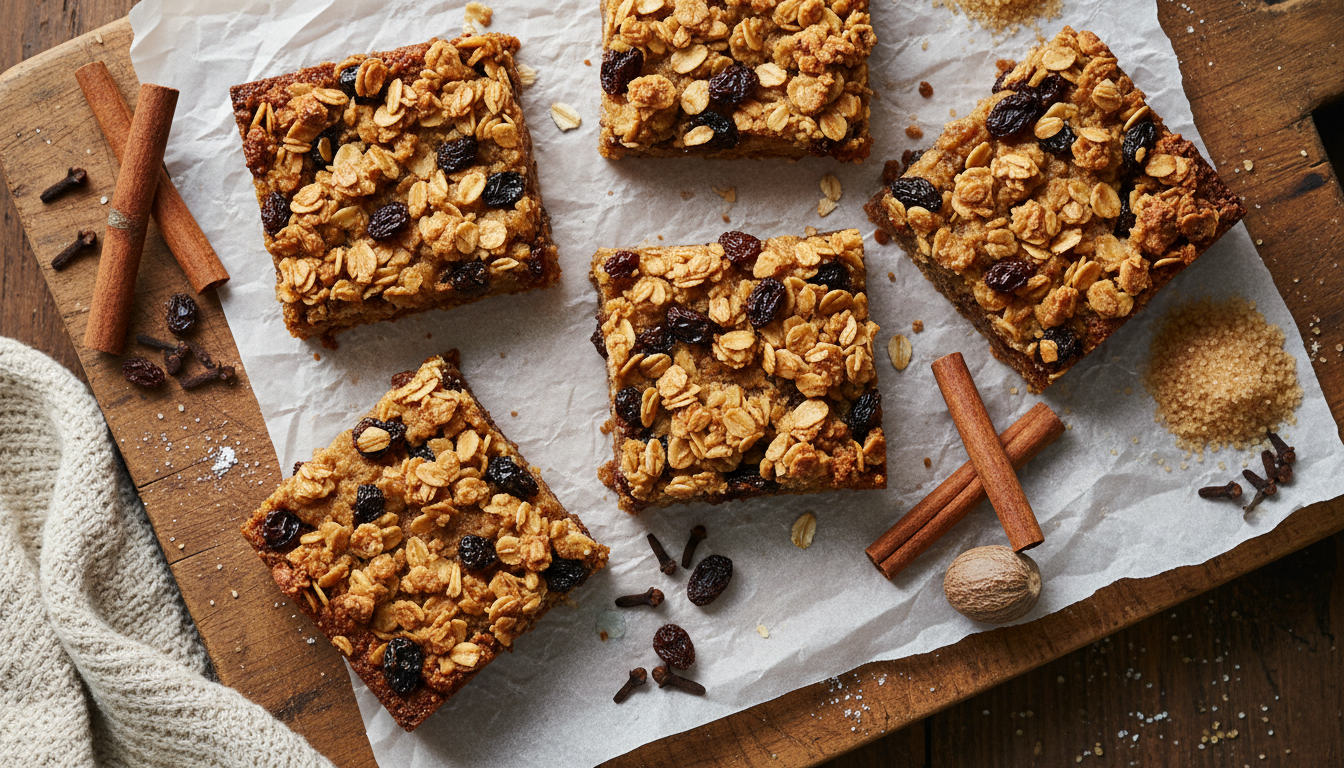
National Raisin and Spice Bar Day on April 5th celebrates this underrated baked treat that combines oats, cinnamon, nutmeg, and plump raisins into a chewy, satisfying bar. It's a nostalgic snack that many people remember from school cafeterias and grandma's kitchen. Simple to make and surprisingly delicious.
How to Use #RaisinAndSpiceBar
Bake a batch and share a photo of the process or the finished bars. Include your recipe in the caption or ask followers to share their favorite old-school snack memories.
A Bar Cookie That Predates Your Grandmother
Raisin and spice bars belong to the family of bar cookies - baked goods that you pour into a sheet pan, bake once, and slice into rectangles. They are the workhorses of American home baking. Not flashy, not complicated, and nearly impossible to mess up. April 5th is National Raisin and Spice Bar Day, a holiday that gives this unassuming dessert a well-earned moment of recognition.
The combination of dried fruit and warm spices in baked goods goes back centuries. Colonial American bakers relied on cinnamon, nutmeg, and allspice to flavor their cakes and breads because these spices masked the taste of rough flour and added warmth to heavy, dense doughs. Molasses was the common sweetener since refined white sugar was expensive and hard to come by. That molasses-and-spice base is still the backbone of most raisin spice bar recipes today.
The Ancient Ingredient That Holds It All Together
Raisins have been around far longer than the bars they fill. The earliest evidence of dried grapes dates to roughly 2000 BC in the Middle East, where hot sun and dry winds did the work naturally. Phoenician and Armenian traders spread them around the Mediterranean, and by the Roman era raisins were common enough to serve as currency for bartering and as prizes in sporting events.
California changed everything in the modern era. In 1873, a brutal heat wave hit the San Joaquin Valley just before harvest, baking Thompson Seedless grapes on the vine before farmers could pick them. Rather than waste the crop, growers brought the shriveled fruit to market. People loved them. Within a few decades, the valley became the raisin capital of the world.
In 1912, local farmers formed the Raisin Growers Cooperative, which eventually became Sun-Maid Growers of California. Two years later they launched the Sun-Maid brand, and by 1915 a real woman named Lorraine Collett was handing out samples at the Panama-Pacific International Exposition in San Francisco. Her image - wearing a red bonnet and holding a tray of grapes - became one of the most recognizable food logos in American history.
Why Warm Spices Hit Different
The spice side of the equation involves a specific group that bakers call "warm spices" - cinnamon, nutmeg, allspice, ginger, and cloves. These are not warm in the chili pepper sense. They contain aromatic compounds like cinnamaldehyde and eugenol that your brain associates with warmth, comfort, and sweetness even before sugar enters the picture.
Allspice deserves special attention here. Christopher Columbus brought it back from Jamaica in the 1490s thinking he had found pepper. Spanish explorers named it pimienta for the same reason. But allspice is not related to pepper at all - it is the dried unripe berry of the Pimenta dioica tree, and its flavor reads like a mashup of cinnamon, cloves, and nutmeg all in one. During the colonial period it became one of the most traded spices after black pepper, which is why it shows up in so many early American baking recipes.
In the classic raisin spice bar, these warm spices work together with molasses and brown sugar to create that specific flavor people describe as "old-fashioned." That is not nostalgia talking. It is a direct line back to colonial-era baking when those ingredients were what most kitchens actually had.
The Perfect Potluck Dessert
Part of the raisin spice bar's staying power is pure practicality. You mix everything in one bowl. The batter is forgiving - a little extra flour or a missing egg will not ruin it. The bars travel well without falling apart, they keep for days at room temperature, and they scale up easily for large batches. Church suppers, school bake sales, office potlucks - these bars were built for feeding crowds without fuss.
A standard batch calls for all-purpose flour, baking soda, salt, cinnamon, ginger, allspice, nutmeg, cloves, shortening or butter, brown sugar, molasses, an egg, and of course a generous cup of raisins. Some recipes add walnuts or pecans for crunch. You bake at 375 degrees Fahrenheit for about 18 minutes, let them cool, and slice. That is it. No frosting required, though a simple glaze of powdered sugar and milk is common.
Related Hashtags
If you are celebrating National Raisin and Spice Bar Day, check out these related hashtags for more things happening on April 5th and other foodie celebrations:
- #NationalCaramelDay - Another sweet treat celebrated on the same day
- #DeepDishPizzaDay - More comfort food on April 5th
- #CheeseLoversDay - For food holiday enthusiasts
- #NationalPotatoChipDay - Another snack-centric celebration
- #NationalPeanutButterLoversDay - A classic pairing with raisins
Quick Info
-
Hashtag#RaisinAndSpiceBar
-
When to PostApril 5th
-
Full GuideAvailable below
Related Hashtags
Find More Hashtags
Search across 830+ curated hashtags