#VitaminCDay
Celebrate the many benefits of Vitamin C today and share your favorite source of this invaluable nutrient.
What Does #VitaminCDay Mean?
National Vitamin C Day on April 4th highlights the importance of this essential nutrient. Vitamin C supports immune function, skin health, and iron absorption. Unlike most animals, humans can't produce their own vitamin C, so we need to get it from food or supplements. Citrus fruits, bell peppers, and strawberries are top sources.
How to Use #VitaminCDay
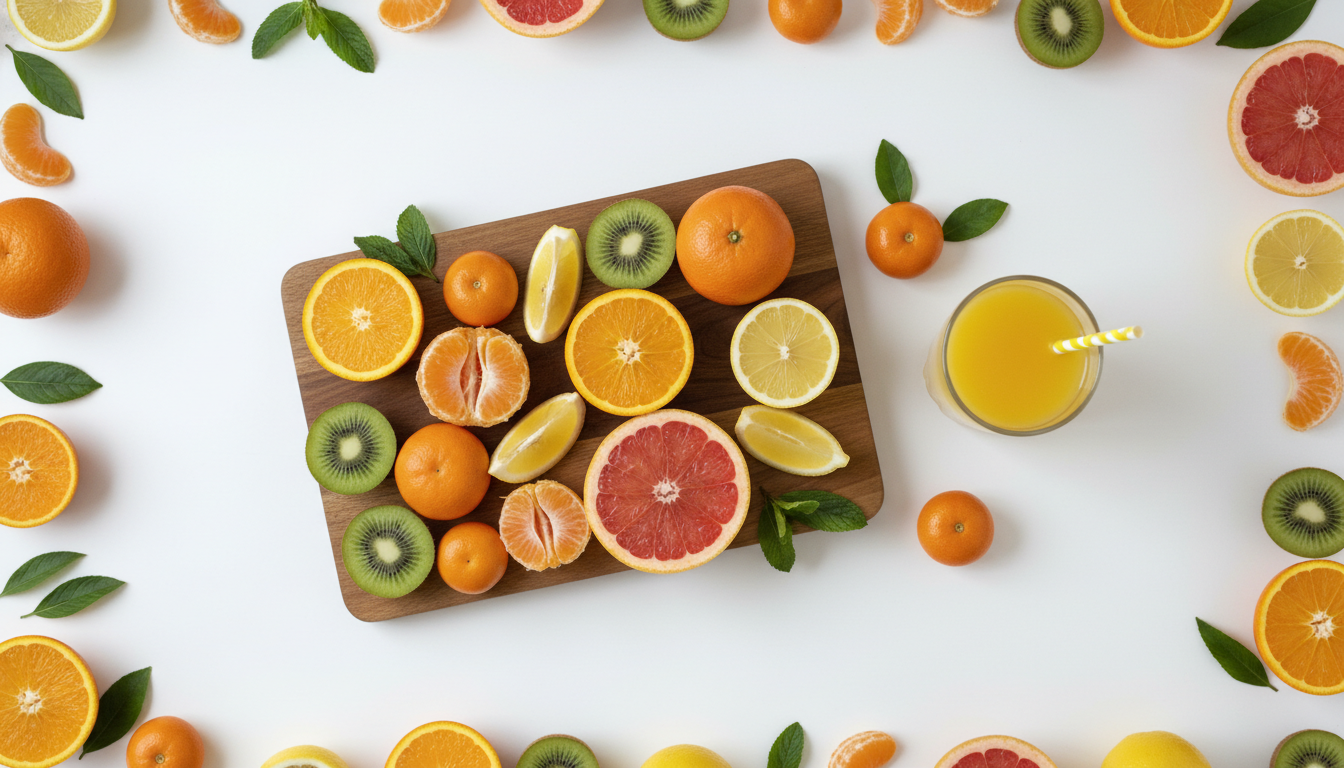
Share your favorite vitamin C-rich foods, a smoothie recipe packed with citrus, or health tips about boosting your immune system. Wellness brands and nutrition accounts can share educational content. A colorful fruit flat-lay works well visually.
The Nutrient Humans Forgot How to Make
National Vitamin C Day falls on April 4th, and it celebrates something most people take completely for granted - a molecule your body desperately needs but lost the ability to produce somewhere around 40 million years ago. Most mammals synthesize their own vitamin C. Dogs do it. Cats do it. Goats can produce upwards of 13,000 milligrams per day when stressed. Humans, other primates, and guinea pigs cannot make a single milligram. A mutation knocked out the gene responsible for the final step in vitamin C synthesis, and we have been dependent on our diets ever since.
The recommended daily intake is 90 milligrams for men and 75 for women. A single orange covers that. But the story of how we figured out we needed this nutrient at all involves centuries of sailors dying horrible deaths, a groundbreaking naval experiment, Hungarian paprika, and a Nobel Prize.
Two Million Sailors and a Disease Nobody Could Explain
Scurvy was the great mystery killer of the Age of Exploration. Historians estimate it affected roughly two million sailors between the 15th and 18th centuries. The symptoms were gruesome: gums swelled and turned black, teeth loosened and fell out, old wounds reopened, and skin hemorrhaged with dark bruises. Sailors on long voyages - months at sea with no fresh food - would deteriorate rapidly, and entire crews sometimes died before reaching port.
Nobody understood why. Theories ranged from laziness to bad air to divine punishment. In 1747, a Scottish naval surgeon named James Lind ran what is often called the first controlled clinical trial in history. He took twelve sailors with scurvy aboard HMS Salisbury and split them into six pairs, giving each pair a different treatment: cider, sulfuric acid, vinegar, seawater, a paste of garlic and mustard, and two oranges and a lemon. The citrus group recovered so quickly they were nursing the others within a week.
It took the British Navy another 48 years to act on Lind's findings. By 1795, lime juice became mandatory on all naval vessels, and scurvy virtually disappeared from the fleet. This is where the nickname "limey" for British sailors comes from, though the limes they switched to from the Caribbean actually contained less vitamin C than the Mediterranean lemons Lind originally tested.
From Paprika to a Nobel Prize
Lind proved citrus worked, but nobody knew why for another 135 years. The actual molecule responsible remained invisible until Hungarian biochemist Albert Szent-Gyorgyi entered the picture. In 1928, while studying adrenal glands, he isolated a mysterious substance he called hexuronic acid. He knew it was chemically interesting but had no idea it was the long-sought anti-scurvy factor.
The connection came in 1932, when Szent-Gyorgyi and his colleague Joseph Svirbely tested hexuronic acid on guinea pigs - one of the few animals that, like humans, cannot produce their own vitamin C. They fed one group of guinea pigs boiled food (heat destroys vitamin C) and gave the other group food enriched with hexuronic acid. The first group developed scurvy and died. The second thrived. Hexuronic acid was vitamin C.
There was just one problem: Szent-Gyorgyi needed large quantities for further research and his adrenal gland supply was limited. His solution was brilliantly local. Szeged, Hungary, where he worked, was famous for its paprika peppers. He tested them on a hunch and found they were loaded with vitamin C. Within weeks he had extracted three pounds of pure crystalline ascorbic acid - renamed from hexuronic acid to reflect its anti-scurvy (anti-scorbutic) properties. In 1937, he received the Nobel Prize in Physiology or Medicine.
The Linus Pauling Megadose Controversy
The vitamin C story took a strange turn in 1970 when Linus Pauling - already a two-time Nobel laureate for chemistry and peace - published "Vitamin C and the Common Cold." He argued that massive doses of vitamin C, far beyond the recommended daily intake, could prevent and shorten colds. He later claimed megadoses could treat cancer.
The scientific community pushed back hard. Pauling's evidence was largely anecdotal, and his methodology lacked the rigor expected of someone with his reputation. The Mayo Clinic ran three controlled trials attempting to replicate his cancer claims and could not. Later meta-analyses showed vitamin C has a modest effect on cold duration - roughly 8 percent shorter for adults who take it regularly - but nothing close to the cure-all Pauling promised. His vitamin C crusade remains one of the most famous cases of a brilliant scientist going too far beyond the data.
What Oranges Are Not Telling You
Oranges get all the vitamin C credit, but they are not even close to the best source. A single guava contains about 228 milligrams of vitamin C per 100 grams - roughly four times what an orange delivers. A cup of chopped red bell pepper packs about 190 milligrams. A single kiwi provides 117 percent of your recommended daily amount. Even broccoli and Brussels sprouts outperform most citrus fruit.
The real surprise is yellow bell peppers, which contain more vitamin C than any other common grocery store produce. And while cooking destroys a significant portion of the vitamin (it breaks down with heat and dissolves in water), raw preparation and quick steaming preserve most of it. The human body cannot store large reserves of vitamin C either - it is water-soluble, so whatever your body does not use gets flushed out within hours. That is why consistent daily intake matters more than occasional megadoses.
Related Hashtags
Looking for more hashtags for April 4th? Check out #Jeep4x4Day, #HugANewspersonDay, #NationalSchoolLibrarianDay, #InternationalCarrotDay, and #NationalWalkAroundThingsDay.
Quick Info
-
Hashtag#VitaminCDay
-
When to PostApril 4th
-
Full GuideAvailable below
Related Hashtags
Find More Hashtags
Search across 830+ curated hashtags