#HugANewsperson
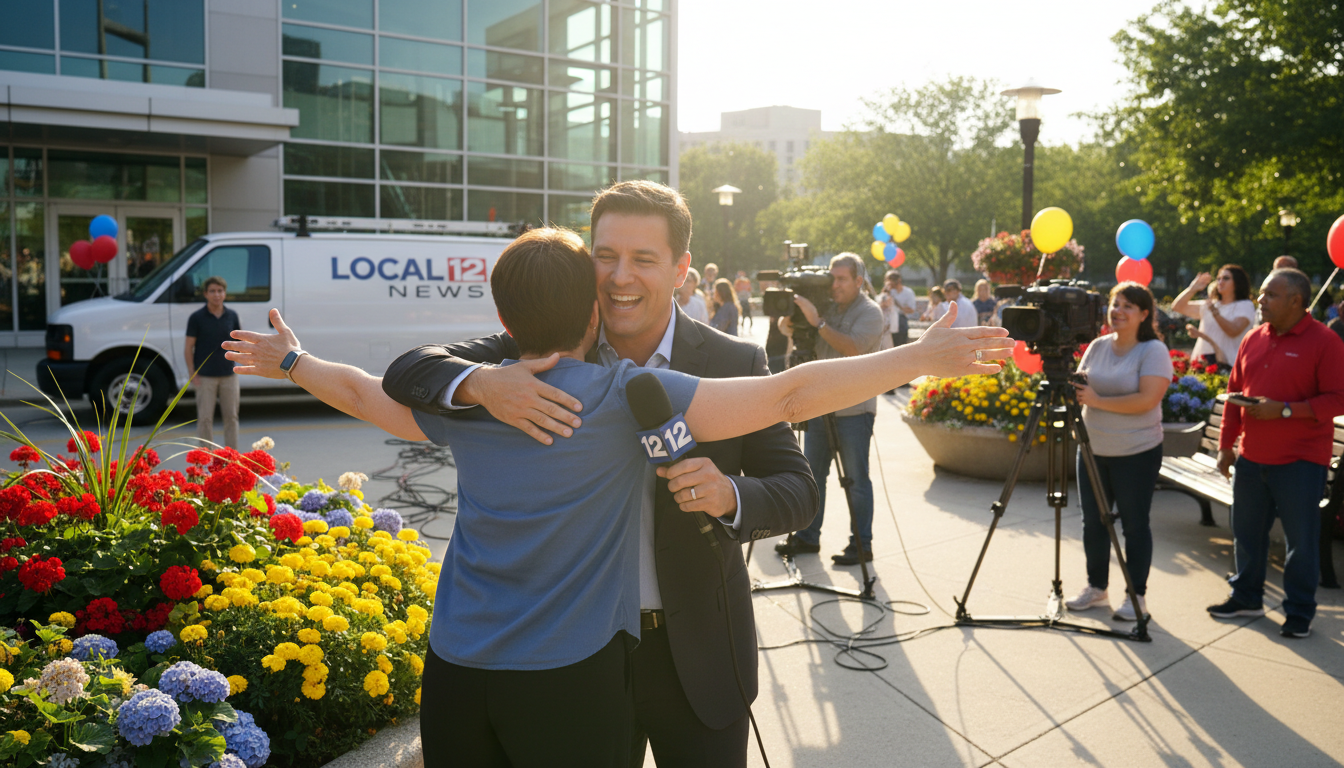
Give your local Newsperson some recognition for their hardwork, it's Hug A Newsperson Day!
What Does #HugANewsperson Mean?
National Hug a Newsperson Day on April 4th recognizes the journalists, reporters, and anchors who keep us informed. In an era of 24/7 news cycles and sometimes hostile work environments, this day is a lighthearted way to show appreciation for the people delivering the news.
How to Use #HugANewsperson
Tag your favorite local news anchor or reporter and thank them. Media organizations can spotlight their team members. Share a story about a journalist whose work has impacted you. Keep the "hug" virtual - most newsrooms appreciate the sentiment from a distance.
The Weirdest Holiday That Makes a Serious Point
National Hug a Newsperson Day falls on April 4th, and yes, the name sounds like it was invented by someone’s well-meaning aunt who watches too much local morning television. But underneath the lighthearted premise sits a genuinely important idea: the people who deliver the news — reporters, anchors, photojournalists, editors, producers — do difficult, sometimes dangerous work that most people take completely for granted.
The holiday has no well-documented origin story, which is fitting for a profession that spends its time documenting everyone else’s stories. It floats around the internet without a founder, a congressional proclamation, or a celebrity endorsement. It just exists, the way a lot of appreciation days do, as a calendar reminder to notice the people you normally look right through.
Why Journalism Is Harder Than It Looks
Most people’s image of a journalist involves a well-dressed anchor reading a teleprompter in a climate-controlled studio. That image is technically accurate for about two percent of the profession. The other ninety-eight percent involves something far less glamorous.
Local television reporters — the ones most likely to be your neighbor, the ones covering your school board meetings and county fairs and highway pileups — routinely work split shifts that start at 3:30 in the morning or end well past midnight. They shoot their own video, write their own scripts, edit their own packages, and do live shots while standing in parking lots during thunderstorms. Starting salaries in small and mid-size markets often sit below $35,000 a year, which in many cities barely covers rent.
Print and digital journalists face a different version of the same grind. Newsroom staffing has dropped by more than sixty percent since 2005, according to Pew Research Center data. The reporters who remain are covering more beats with fewer resources, often filing multiple stories per day while simultaneously maintaining social media presence, producing podcasts, and shooting video for the outlet’s YouTube channel. The phrase “do more with less” stopped being a management cliché and became the literal job description.
The Danger Nobody Talks About
The Committee to Protect Journalists tracks reporter deaths worldwide, and the numbers are sobering. But physical danger is only one dimension of the risk. In the United States, threats against journalists have escalated sharply over the past decade. Reporters covering local government, protests, and public health have reported receiving death threats, being doxxed, and having their family members harassed online.
The psychological toll is significant and poorly understood. Journalists covering trauma — mass shootings, natural disasters, child abuse cases, war zones — develop post-traumatic stress at rates comparable to first responders, according to research published in the Journal of Traumatic Stress. But unlike firefighters and paramedics, most newsrooms offer minimal mental health support. The cultural expectation has historically been to file the story, go home, and come back tomorrow ready to do it again.
This is part of what makes a day like April 4th more than a joke. The “hug” is metaphorical for most of us — newsrooms are professional environments, and showing up to embrace a stranger would rightfully alarm everyone involved. But the sentiment behind it matters: these people are doing work that democracies literally cannot function without, and a simple “thank you” goes further than you might think.
How Local News Actually Keeps Communities Functioning
There is a growing body of research showing what happens when local news disappears. A 2018 study from the Brookings Institution found that municipal borrowing costs increase when a local newspaper closes, because the accountability journalism that kept public officials honest is no longer there. Property values in areas that lose their local newspaper decline. Voter turnout in local elections drops. Corruption in city government increases measurably.
The journalists who prevent these outcomes are not famous. They are the reporter who sits through a four-hour city council meeting on a Tuesday night to catch the paragraph in the budget amendment that redirects park maintenance funds to a contractor who happens to be the mayor’s brother-in-law. They are the photojournalist who drives ninety minutes to cover a high school football playoff game because the kids deserve to see their names in print. They are the editor who stays late to fact-check a story one more time because getting it wrong means real consequences for real people.
How to Actually Show Appreciation
Skip the literal hug. Here is what actually helps: share their work. When a local reporter publishes a story that matters to your community, share it on social media with a comment about why it matters. Subscribe to your local newspaper or news site — even digital-only subscriptions directly fund the journalism. Write a letter to the station manager or editor when a reporter does exceptional work, because positive feedback is genuinely rare in newsrooms and it matters more than you might expect.
Tag your favorite local anchor or reporter on April 4th and tell them specifically what you appreciate about their coverage. Not “great job” — something specific, like “your reporting on the water treatment plant situation helped me understand what was actually happening.” Specific recognition from the community is the single most motivating thing a journalist can receive, according to basically every journalist who has ever been asked.
Related Hashtags
Pair your Hug a Newsperson Day posts with these related tags: #HugAPlumberDay for the “hug a professional” series, #HugAnAustralianDay for more lighthearted hug holidays, #HugYourCatDay for the animal version, and #GoodnewsTuesday for positive news content that highlights the best of journalism.
Quick Info
-
Hashtag#HugANewsperson
-
When to PostApril 4th
-
Full GuideAvailable below
Related Hashtags
Find More Hashtags
Search across 830+ curated hashtags