#Chicken
Celebrate this blue ribbon dish..by eating it! It's National Chicken Cordon Bleu Day!
What Does #Chicken Mean?
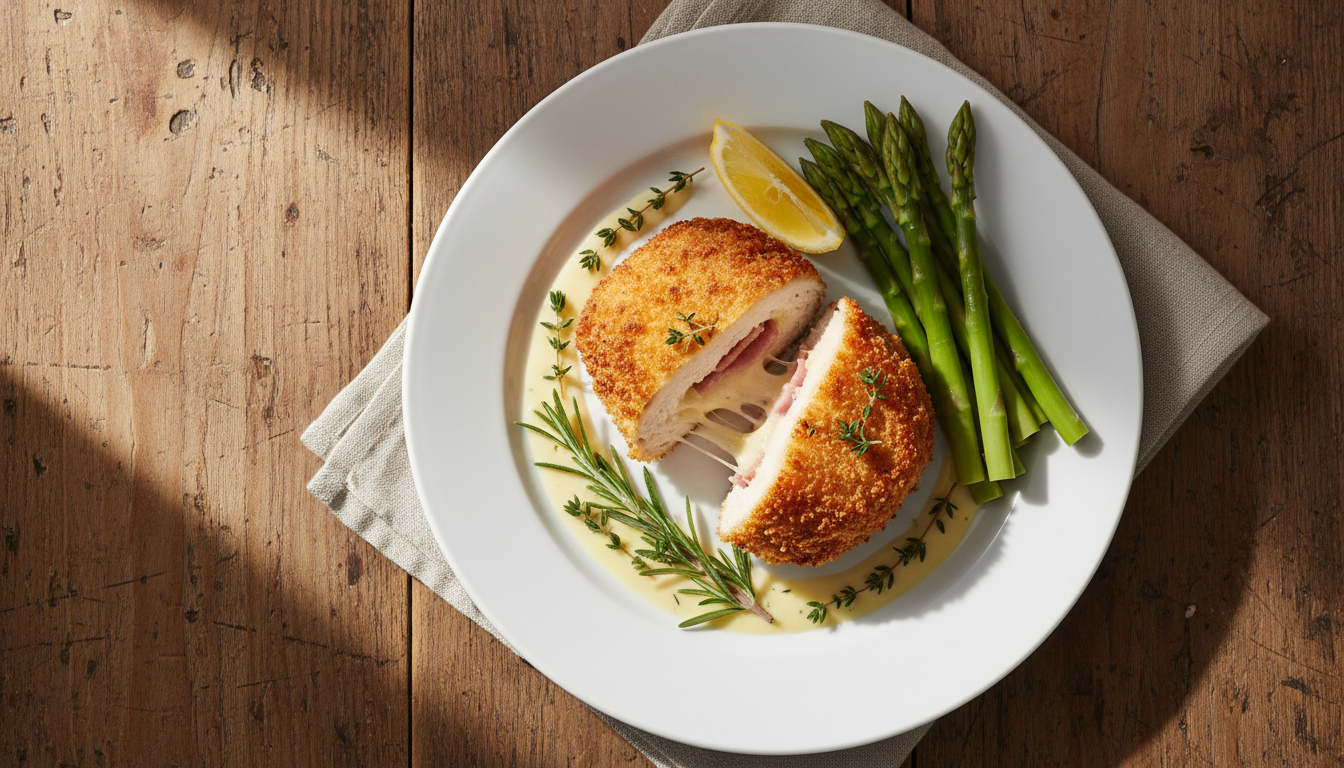
National Chicken Cordon Bleu Day on April 4th celebrates this classic dish of breaded chicken stuffed with ham and Swiss cheese. Despite the French name (meaning "blue ribbon"), the dish likely originated in Switzerland in the mid-20th century. It's a dinner party favorite that feels fancy but is actually pretty approachable to cook.
How to Use #Chicken
Share your chicken cordon bleu recipe or a photo of your homemade attempt. Restaurants can feature it as a special. Food bloggers can post their take on the classic, whether traditional or with a creative twist.
A French Name, a Swiss Origin, and a Lot of Confusion
National Chicken Cordon Bleu Day falls on April 4th, and if you have ever wondered why a dish with a fancy French name tastes suspiciously like something your mom might have pulled from the freezer section at Kroger, you are asking exactly the right question. Chicken cordon bleu is one of those dishes that lives a double life — equally at home on a white tablecloth in a Parisian restaurant and in the basket of a college dining hall deep fryer.
The name translates to “blue ribbon,” a reference to L’Ordre des Chevaliers du Saint-Esprit, a French order of knights founded in 1578 whose members wore a blue ribbon as part of their insignia. Over the centuries, “cordon bleu” evolved into a general term for culinary excellence — anything prepared to the highest standard. The famous Le Cordon Bleu cooking school in Paris, founded in 1895, carries the same pedigree.
But here is where it gets interesting: the dish itself almost certainly did not originate in France.
The Real Origin Story
Most food historians trace chicken cordon bleu to Switzerland, sometime in the mid-twentieth century. The original version used veal instead of chicken — a thin veal cutlet wrapped around a slice of Gruyère cheese and a piece of ham, then breaded and fried. This preparation, called Schnitzel Cordon Bleu, shows up in Swiss and German cookbooks starting in the 1940s.
The switch from veal to chicken happened as the dish migrated to American kitchens in the 1960s. Chicken was cheaper, more available, and frankly more forgiving for home cooks who might overcook it slightly. The substitution stuck, and by the 1970s, chicken cordon bleu was a dinner party staple across the United States — the kind of dish that signaled you had put in some effort without requiring culinary school training.
The irony is thick: a dish named after French culinary excellence, invented in Switzerland, perfected in American suburban kitchens. That is the kind of origin story that would make a food historian pull their hair out.
Why It Works So Well
From a pure cooking science perspective, chicken cordon bleu is quietly brilliant. The construction solves several problems at once. The ham layer acts as a moisture barrier, preventing the Swiss cheese from leaking out through the bottom of the chicken during cooking. The breading creates an insulating shell that lets the interior steam gently, which keeps the chicken breast from drying out — the number one complaint about cooking chicken breasts by any other method.
The cheese itself plays a crucial role. Swiss cheese (or Gruyère, if you are being authentic) has a melting point that sits in the perfect range — it goes molten and gooey without turning into an oily puddle the way cheddar might. That first cut through the crispy breading releases a slow cascade of melted cheese that is genuinely one of the more satisfying moments in home cooking.
Temperature control is the whole game. The exterior needs to hit around 375°F to achieve that golden, shatteringly crisp crust, while the interior needs to reach 165°F for food safety. The trick most home cooks miss is starting in a skillet for the crust and finishing in a 350°F oven for even cooking. Trying to do it all in the pan usually means burnt breadcrumbs and raw chicken in the center — a combination nobody wants.
The Frozen Food Aisle Changed Everything
In the 1980s, Barber Foods began selling pre-made frozen chicken cordon bleu in supermarkets, and the dish’s identity split in two. On one side, you had the dinner party version — hand-pounded chicken breasts, good Gruyère, prosciutto instead of deli ham, a Dijon cream sauce on the side. On the other, you had the frozen version that college students and busy parents could throw in the oven for 35 minutes and call dinner.
Both versions are valid. The frozen version introduced millions of people to a dish they might never have encountered otherwise. And the from-scratch version rewards the effort with something that genuinely tastes like a different dish entirely — the fresh breadcrumb coating, the quality of the cheese, and the sauce elevate it into restaurant territory.
Modern variations have pushed the concept further. Korean cordon bleu swaps the ham for bulgogi-marinated beef and uses gochujang in the breading. Italian versions substitute mozzarella and capicola with a marinara dipping sauce. Vegetarian takes use portobello mushrooms or thick-sliced eggplant as the wrapper, with smoked gouda standing in for the Swiss.
Content Strategies That Actually Work
April 4th is a golden opportunity for food content. Recipe bloggers can post side-by-side comparisons of classic versus modern interpretations. The “first time making cordon bleu” video format performs extremely well on TikTok and Instagram Reels — the cross-section reveal when you cut into a perfectly cooked one is inherently shareable content.
Restaurants and meal kit services can feature it as a daily special and ride the hashtag wave. Home cooks should not underestimate the power of an honest “nailed it versus failed it” post — imperfect food content consistently outperforms polished food photography in engagement metrics because it feels authentic.
Related Hashtags
If you are posting about Chicken Cordon Bleu Day, pair your content with these related tags for broader reach: #CheeseLoversDay for the cheese angle, #GrilledCheeseSandwichDay for cheesy comfort food crossover, #CheeseFondueDay for melted cheese enthusiasts, #FriedChickenDay for fried chicken lovers, and #FoodFriday for general food content discovery.
Quick Info
-
Hashtag#Chicken
-
When to PostApril 4th
-
Full GuideAvailable below
Related Hashtags
Find More Hashtags
Search across 830+ curated hashtags