#ChineseAlmondCookieDay
Bake up a batch of Chinese Almond Cookies in celebration of this day.
What Does #ChineseAlmondCookieDay Mean?
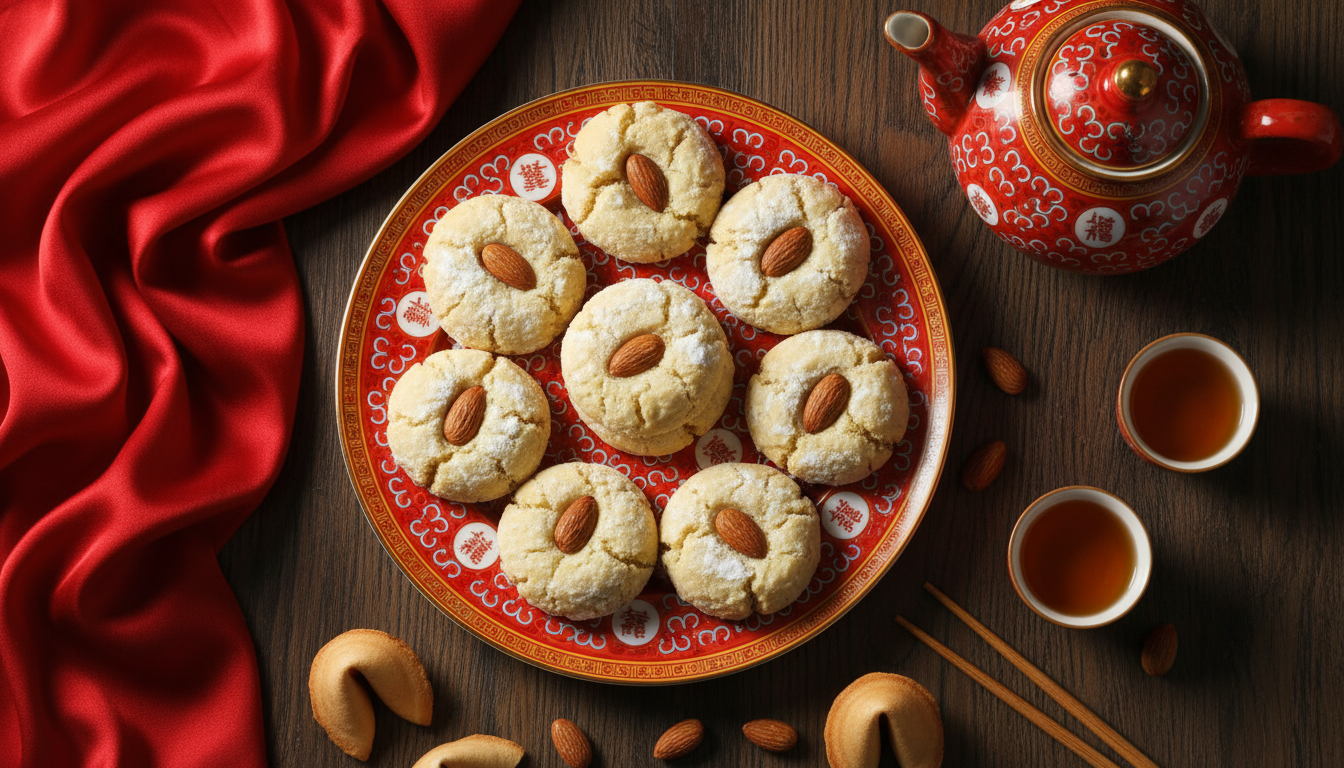
National Chinese Almond Cookie Day on April 9th celebrates these delicate, crumbly cookies that are a staple at Chinese-American restaurants. Made with almond flour or extract and topped with a whole almond, they have a buttery, nutty flavor and a satisfying snap. They're often served at the end of a meal alongside fortune cookies.
How to Use #ChineseAlmondCookieDay
Bake a batch and share photos of the process. Post them alongside a cup of tea for that perfect pairing shot. Share a recipe or reminisce about getting these at your favorite Chinese restaurant.
What Is National Chinese Almond Cookie Day?
National Chinese Almond Cookie Day falls on April 9th, and it celebrates one of the most recognizable cookies in Chinese-American cuisine. You know the one - round, golden, slightly cracked on top, with a single whole almond pressed into the center. They show up at the end of meals in Chinese restaurants right alongside the fortune cookies, and they have a flavor that is impossible to confuse with anything else.
These cookies are buttery, crumbly, and almost melt on your tongue. The almond flavor is front and center, but it is subtle rather than overpowering. They hit that sweet spot between a shortbread and a sugar cookie, and once you have had a good one, you understand why they have survived for decades in a food landscape where trends come and go constantly.
Origins and the American Connection
The history of Chinese almond cookies is a story about adaptation. Traditional Chinese walnut cookies, or hup toh soh, have been around for centuries. They were a staple during Chinese New Year celebrations and other festivals. The original versions used lard for richness and ground walnuts for flavor, resulting in a dense, sandy-textured cookie that crumbled the moment you bit into it.
When Chinese immigrants arrived in the United States in the 19th and early 20th centuries, they adapted their recipes to available ingredients. Walnuts were less common, but almonds grew abundantly in California. Butter replaced lard as American tastes shifted. Almond extract, which was cheap and widely available, became the defining flavor. The result was a cookie that kept the spirit of the original but was built for American pantries and American palates.
Chinese-American restaurants in the mid-20th century turned these cookies into a standard closing course. They were easy to make in bulk, held up well at room temperature, and gave diners a sweet finish that felt distinctly Chinese without being unfamiliar. By the 1960s and 1970s, you could find them in practically every Chinese restaurant from San Francisco to New York.
What Makes the Texture Unique
The thing that sets a Chinese almond cookie apart from other cookies is the crumb. A good one should fracture cleanly when you break it in half, almost like a piece of shortbread, but with a slightly grainier texture. That graininess comes from the traditional technique of using some form of ground nut or nut flour in the dough. When you use almond flour or finely ground almonds alongside regular all-purpose flour, you get a cookie that cannot hold itself together the way a chewy chocolate chip cookie does. And that is exactly the point.
Many recipes also include a small amount of baking soda or baking powder, which creates those signature surface cracks during baking. The cracks are not just decorative - they indicate that the interior is light and airy rather than dense. Before baking, each cookie gets an egg wash brushed across the top, which creates that glossy, golden sheen. The whole almond pressed into the center is the final signature touch.
Temperature matters more than most people realize. These cookies should bake at a moderate temperature - around 325 to 350 degrees - for about 15 minutes. Push the temperature too high and you get a cookie that is crunchy on the outside and underdone in the middle. Get it right, and the entire cookie has that uniform, delicate snap.
Beyond the Restaurant Version
Home bakers who dig into Chinese almond cookies discover there is a lot of room to experiment. The basic formula - butter, sugar, flour, almond flavoring, and an egg - is forgiving. Some bakers swap out half the all-purpose flour for rice flour, which produces an even more delicate, crumbly texture that practically dissolves. Others add a tablespoon of toasted sesame oil, which gives the cookies a warm, nutty depth that straight butter cannot achieve.
In China and Hong Kong, bakeries sell versions that Americans might barely recognize. Some use peanuts instead of almonds. Others incorporate mung bean paste for a slightly earthy sweetness. There are versions made with black sesame, which turn the cookies a dramatic dark gray and add a deeply roasted, almost savory flavor.
One of the best things about Chinese almond cookies is how well they store. In an airtight container, they will stay fresh for over a week. They mail well too, which has made them a popular holiday gift in Chinese-American households. A tin of homemade almond cookies carries a certain weight of tradition - it says someone spent time in the kitchen for you.
Pairing and Serving Ideas
Chinese almond cookies and tea are a natural combination. A light jasmine or oolong tea complements the buttery sweetness without competing with the almond flavor. Some people dip them in their tea like biscotti, though the fragile texture means you have to be quick about it or the cookie disintegrates.
They also work surprisingly well alongside fresh fruit. A plate of sliced oranges and a few almond cookies make a simple, elegant dessert that feels intentional rather than thrown together. For a more modern take, crush a few cookies and use them as a cheesecake crust or sprinkle them over vanilla ice cream.
How to Post About It
Chinese almond cookies are genuinely photogenic. That golden color, the cracked surface, the single almond on top - it all reads beautifully on camera. Shoot them on a simple plate or stacked on a cooling rack. A flat lay with tea and a few loose almonds makes for a clean, inviting image. If you are baking them from scratch, the process shots - pressing the almonds in, brushing the egg wash - perform well as short-form video content.
Share a family recipe if you have one, or tag a Chinese bakery in your city that makes great ones. Food heritage content generates strong engagement because it invites people to share their own memories and traditions.
Related Hashtags
If you enjoy food holidays, check out these related hashtag pages: #EmpanadaDay, #CoffeeCakeDay, #CinnamonCrescentDay, #NationalBeerDay, and #FoodFriday.
Quick Info
-
Hashtag#ChineseAlmondCookieDay
-
When to PostApril 9th
-
Full GuideAvailable below
Related Hashtags
Find More Hashtags
Search across 830+ curated hashtags