#CinnamonCrescentDay
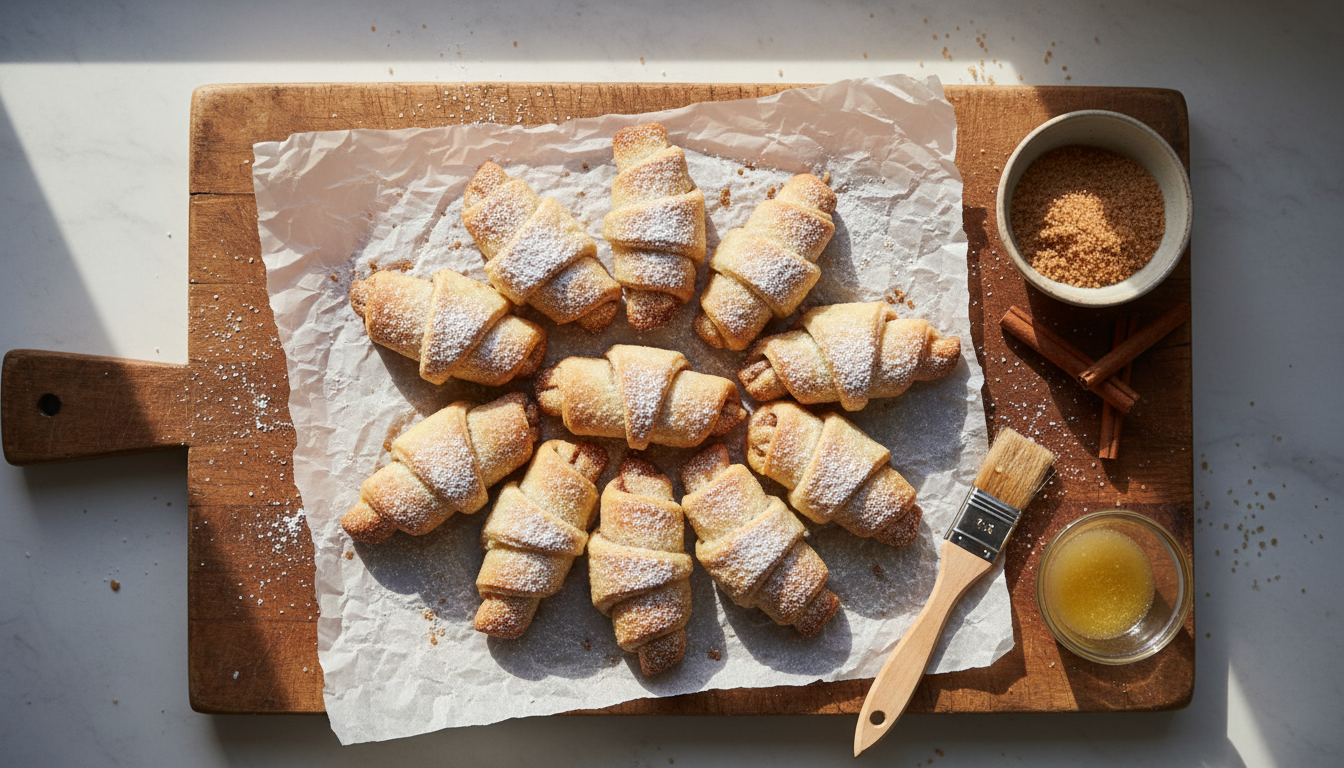
Perfect day for a batch of Cinnamon Crescents, bake some up and share the love!
What Does #CinnamonCrescentDay Mean?
National Cinnamon Crescent Day on April 10th celebrates the warm, flaky, cinnamon-swirled pastry that makes any morning better. Whether you bake them from scratch or pop open a tube of refrigerated dough, cinnamon crescents are a crowd-pleaser. The combination of buttery dough and sweet cinnamon sugar is hard to beat.
How to Use #CinnamonCrescentDay
Share a baking photo or a shot of freshly baked cinnamon crescents. Post your recipe or ask followers to share their favorite breakfast pastry. Morning food content gets great engagement.
The Story Behind National Cinnamon Crescent Day
National Cinnamon Crescent Day falls on April 10th, celebrating one of the most satisfying combinations in baking: buttery crescent roll dough swirled with cinnamon and sugar. The holiday does not have a well-documented origin story, but it sits in a long tradition of food-specific observance days that gained traction through social media and baking communities in the 2010s.
What makes cinnamon crescents different from cinnamon rolls is the dough. Crescents use a laminated dough - layers of butter folded between layers of flour - which creates that flaky, airy texture. Cinnamon rolls typically use an enriched yeast dough that is denser and chewier. The crescent version delivers cinnamon flavor in a lighter package, and the crescent shape means more surface area gets crispy in the oven.
Cinnamon: A Spice Worth More Than Gold
Cinnamon has one of the wildest origin stories in the spice trade. For centuries, Arab traders deliberately spread false tales about where it came from. Herodotus, writing around 450 BC, recorded that cinnamon sticks were gathered from the nests of giant birds on unreachable cliff faces. Traders claimed you had to lure the birds with heavy pieces of meat that would break the nests and send cinnamon sticks tumbling down. The whole story was fabricated to protect the supply chain and justify sky-high prices.
The truth was less dramatic but still impressive. Cinnamon comes from the inner bark of trees in the genus Cinnamomum, native to Sri Lanka and southern India. Workers strip the outer bark, then peel off the thin inner bark in long sheets that curl into quills as they dry - those are the cinnamon sticks you see in stores. Sri Lanka still produces about 80% of the world’s true cinnamon (Ceylon cinnamon), though most of what Americans buy is actually cassia, a closely related species grown mainly in China, Vietnam, and Indonesia.
During the medieval period, cinnamon was genuinely worth more than gold by weight. The Portuguese conquered Sri Lanka in the early 1500s partly to control the cinnamon trade. The Dutch East India Company took over in 1658 and held a monopoly for nearly 150 years. When the British gained control in 1796, cinnamon cultivation had spread enough that the monopoly was effectively broken. Prices dropped, and what was once a luxury spice became a pantry staple.
The Science of Why Cinnamon Tastes Like Cinnamon
The compound responsible for cinnamon’s distinctive flavor is cinnamaldehyde, which makes up about 65-80% of the essential oil in cinnamon bark. It is one of the few flavor compounds that triggers both taste and temperature receptors in your mouth. Cinnamaldehyde activates TRPA1 receptors - the same receptors that detect wasabi and mustard oil - which is why cinnamon can feel slightly warm or tingly on your tongue even at room temperature.
This dual-receptor activation is also why cinnamon pairs so well with sugar. The warmth sensation from the cinnamaldehyde creates a contrast with sweetness that makes both flavors seem more intense. Bakers figured this out empirically centuries before anyone understood the neuroscience. A cinnamon crescent without sugar would taste sharp and almost medicinal. Sugar softens the heat and lets the aromatic complexity come through - notes of clove, citrus, and wood that cinnamaldehyde alone would overpower.
There is a meaningful difference between Ceylon cinnamon and cassia when baking. Cassia contains significantly more coumarin, a compound that can cause liver issues in large amounts. Germany actually set legal limits on coumarin in food products back in the 1990s. For occasional cinnamon crescents, the difference is negligible. But if you are the type of person who puts cinnamon in everything - oatmeal, coffee, toast, smoothies - switching to Ceylon cinnamon is worth considering.
Crescent Dough: From Vienna to Pillsbury
The crescent roll shape traces back to the kipferl, an Austrian pastry that predates the more famous croissant. The origin legend says bakers in Vienna created the crescent shape to celebrate the defeat of the Ottoman siege in 1683, shaping the dough like the crescent moon on the Ottoman flag. Historians have mostly debunked this story - crescent-shaped pastries appear in Austrian records well before 1683 - but it is a good enough tale that it refuses to die.
What is historically documented is that Austrian entrepreneur August Zang brought Viennese baking techniques to Paris around 1838, opening a bakery on Rue de Richelieu. French bakers adapted the kipferl with their laminating techniques, creating the croissant we know today. The crescent roll followed a different path, becoming a quicker, less labor-intensive version that home bakers could manage without professional training.
In the United States, the crescent roll was democratized by Pillsbury, which introduced refrigerated crescent roll dough in 1965. The product was an immediate hit because it eliminated the most difficult part of making crescents at home - the laminating process, which requires precise temperature control and multiple rounds of rolling and folding. Pillsbury sells roughly 200 million tubes of crescent roll dough annually, and cinnamon-sugar filling is consistently the most popular homemade variation.
How to Make Better Cinnamon Crescents at Home
Whether you use store-bought dough or make your own, a few techniques make a real difference. First, mix your cinnamon and sugar with a small pinch of salt and a tiny amount of cornstarch. The cornstarch absorbs moisture released during baking and prevents the filling from turning into a sticky puddle at the bottom of the pan.
Second, brush the dough with melted butter before sprinkling the cinnamon sugar. This creates a moisture barrier that keeps the layers distinct and adds richness. Some bakers add a thin layer of cream cheese before the cinnamon sugar, which creates a tangy counterpoint to the sweetness and keeps the center soft.
Third, bake at a higher temperature than you might expect - 400 degrees Fahrenheit rather than the typical 350. The higher heat sets the outer layers quickly, trapping steam inside and maximizing the flaky texture. Pull them when the tops are golden brown but before they darken. Overbaked crescents lose their tender interior and become dry crackers.
For a finishing touch, drizzle a simple glaze made from powdered sugar, a splash of vanilla extract, and just enough milk to make it pourable. Apply the glaze while the crescents are still warm so it sets into a thin, slightly crackly shell. This is the difference between something that looks homemade and something that looks professional.
Related Hashtags
Looking for more hashtags to use on April 10th? Check out #EncourageAYoungWriterDay and #FarmAnimalsDay, which also fall around this date. For more food-themed hashtag days, see #ChineseAlmondCookieDay and #CherishAnAntiqueDay.
Quick Info
-
Hashtag#CinnamonCrescentDay
-
When to PostApril 10th
-
Full GuideAvailable below
Related Hashtags
Find More Hashtags
Search across 830+ curated hashtags