#FarmAnimalsDay
Show some appreciation for farm animals today and spread awareness of proper treatment.
What Does #FarmAnimalsDay Mean?
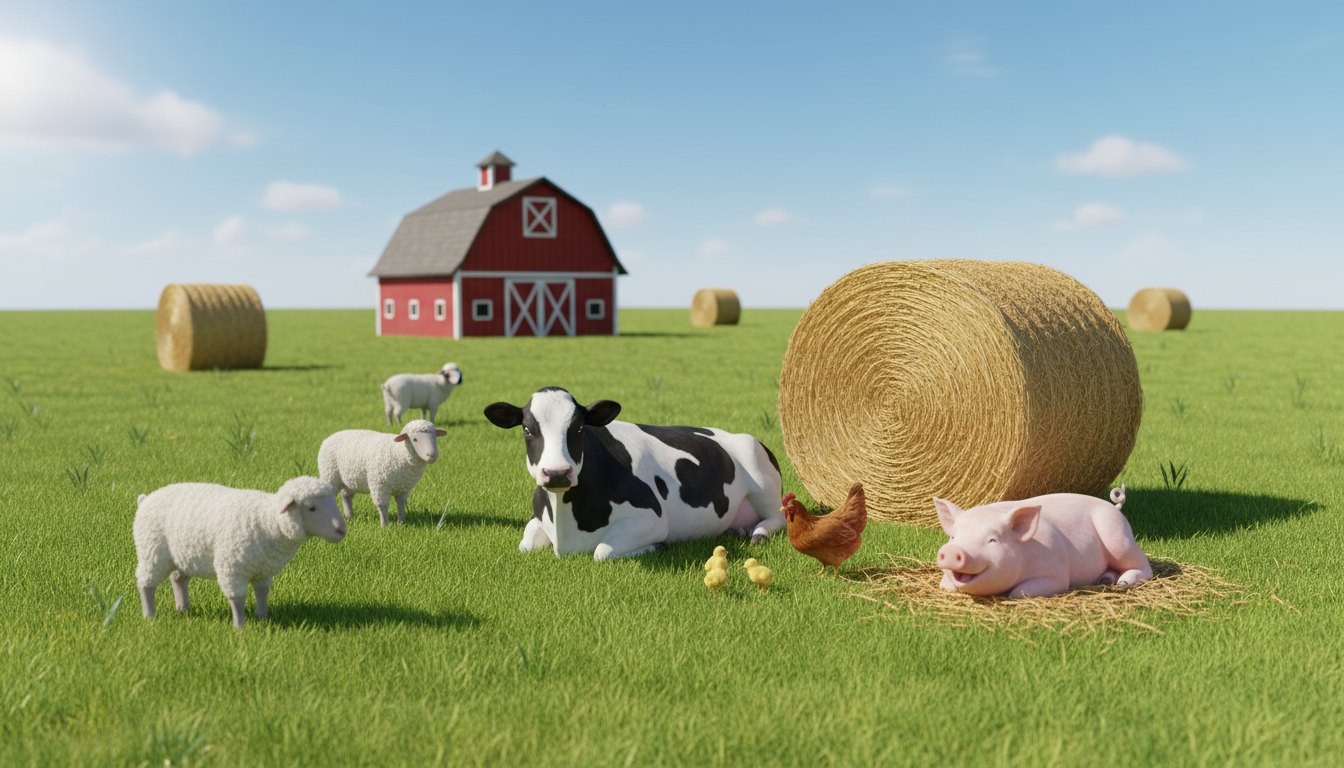
National Farm Animals Day on April 10th raises awareness about the welfare of farm animals like cows, pigs, chickens, goats, and sheep. Founded by celebrity animal rights advocate Colleen Paige, the day encourages people to think about where their food comes from and to support humane farming practices.
How to Use #FarmAnimalsDay
Share cute photos of farm animals or visit a local farm sanctuary. Post about supporting humane farming or share facts about farm animal welfare. Keep it positive and educational rather than preachy.
The Complicated History of Farm Animals and Humans
National Farm Animals Day on April 10th was created by Colleen Paige, the same animal welfare advocate behind National Dog Day and National Pet Day. The date falls in early spring when many farms are deep into lambing season and baby animal season generally - a strategic choice that makes the day feel natural rather than arbitrary.
But the day raises questions that go beyond cute photos of piglets. The relationship between humans and farm animals stretches back roughly 10,000 years to the Neolithic Revolution, and it has never been simple. Understanding that history makes the conversation about farm animal welfare a lot more interesting than most social media posts suggest.
How Domestication Actually Worked
Most people picture domestication as ancient humans capturing wild animals and taming them. The reality was messier and more mutual than that. Genetic research published in Science in 2017 showed that sheep were among the first animals domesticated, around 8000 BC in Mesopotamia, from the Asiatic mouflon. But the process was not a single event. It happened independently in multiple locations over thousands of years.
Cattle tell an even more complex story. All modern domestic cattle descend from the aurochs, a massive wild ox that stood six feet tall at the shoulder and had enormous forward-curving horns. The last known aurochs died in Poland in 1627. DNA analysis from a 2012 study in Molecular Biology and Evolution showed that all the world's 1.4 billion cattle descend from a founding herd of roughly 80 animals domesticated in the Fertile Crescent about 10,500 years ago. Eighty animals. That is an absurdly narrow genetic bottleneck for a species that now outnumbers every other large mammal on the planet.
Chickens have a different origin story altogether. They descend from red junglefowl in Southeast Asia, but a 2022 study in Nature found that domestication happened much later than previously thought - around 1500 BC rather than 8000 BC. The trigger was rice farming. When humans started cultivating rice, the grain attracted wild junglefowl, which gradually became comfortable around people. Chickens basically domesticated themselves by following the food.
What Farm Animals Actually Experience
The science of farm animal cognition has advanced dramatically in the last two decades, and the results keep surprising researchers. Pigs consistently outperform dogs on cognitive tests. A 2015 paper in the International Journal of Comparative Psychology reviewed decades of research and found that pigs can use mirrors to find hidden food, play simple joystick-controlled video games, and distinguish between pigs they know and strangers. They have excellent long-term memories and can remember specific events for years.
Cows form deep social bonds and hold grudges. Research from the University of Northampton found that cows have best friends and experience measurable stress when separated from them - their cortisol levels spike and their heart rates increase. A 2019 study in Scientific Reports showed that cows produce distinct vocal calls for different emotional states, and other cows can tell the difference.
Chickens have a communication system with at least 24 distinct vocalizations, including separate alarm calls for aerial and ground predators. They can do basic arithmetic, understand object permanence (the knowledge that something still exists when you cannot see it), and demonstrate self-control - waiting for a better food reward rather than taking an immediate smaller one.
None of this means every farm is a horror show. But it does mean the animals in those farms are experiencing their lives in ways that are more complex than most people assume.
The Scale of Modern Farming
The numbers are staggering by any measure. The USDA reports that the United States processes roughly 10 billion land animals for food annually. Globally, the FAO estimates that number at about 80 billion. The vast majority of these animals - over 90% in the US according to the Sentience Institute - live on concentrated animal feeding operations (CAFOs), commonly called factory farms.
The shift happened remarkably fast. In 1950, the average American dairy farm had about 5 cows. Today, farms with 10,000 or more cows are common. In 1960, it took 63 days to raise a broiler chicken to market weight. Modern breeds reach the same weight in 42 days. That is a 33% reduction in growing time achieved through selective breeding and feed optimization - but those fast-growing breeds often develop leg problems because their skeletal systems cannot keep up with their muscle growth.
The economic pressures are real. Farming operates on thin margins, and producers who invest in higher welfare standards face higher costs that consumers may or may not be willing to pay. A 2020 study from Oklahoma State University found that while 77% of consumers say they care about farm animal welfare, only about 33% consistently buy higher-welfare products when they cost more.
What You Can Actually Do
National Farm Animals Day is not about guilt. It is about awareness. If you want to engage meaningfully, a few actions carry more weight than a hashtag alone. Visit a farm sanctuary - organizations like Farm Sanctuary, The Gentle Barn, and Woodstock Farm Sanctuary offer tours where you can meet rescued farm animals in person. It changes the conversation when you have looked a pig in the eye and watched it solve a puzzle.
Support farms that prioritize animal welfare. Certified Humane, Animal Welfare Approved, and Global Animal Partnership are third-party certification programs that actually inspect farms, unlike vague label claims like "natural" or "farm-fresh" that have no legal enforcement behind them.
And share what you learn. The gap between what science knows about farm animal cognition and what the general public understands is enormous. Closing that gap is something a social media post can genuinely help with.
Related Hashtags
Looking for more hashtags to use on April 10th? Check out #NationalSiblingsDay, #CinnamonCrescentDay, and #EncourageAYoungWriterDay, which share the same date. For another animal-related day, see #NationalPetDay on April 11th.
Quick Info
-
Hashtag#FarmAnimalsDay
-
When to PostApril 10th
-
Full GuideAvailable below
Related Hashtags
Find More Hashtags
Search across 830+ curated hashtags