#AllIsOurs
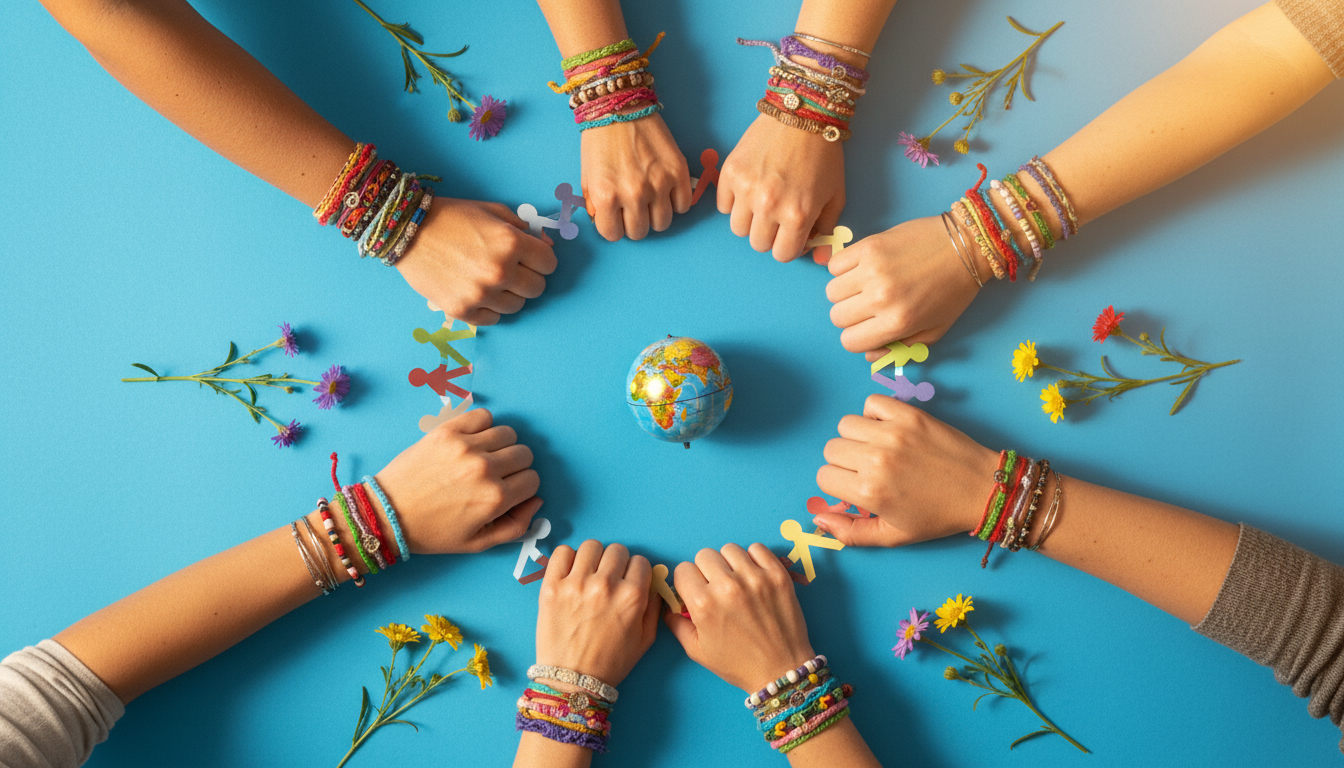
The world is..ours? Celebrate All Is Ours day with all your loved ones.
What Does #AllIsOurs Mean?
National All Is Ours Day on April 8th is about appreciating everything we share as a community and a society - parks, libraries, public spaces, and the natural world. It's a reminder that we all have a stake in the world around us and that shared resources belong to everyone.
How to Use #AllIsOurs
Share a photo of a beautiful public space, park, or community resource you love. Talk about what you're grateful to have access to and encourage others to appreciate what's "ours" together.
What Is National All Is Ours Day?
National All Is Ours Day lands on April 8th, and it's built around one deceptively simple idea - the world around us belongs to all of us. The parks, the libraries, the sidewalks, the rivers, the night sky. None of it has a single owner. This day is about pausing long enough to actually feel that, rather than just knowing it intellectually.
The origins of this holiday are murky. It shows up on holiday calendars without a clear creator or founding date, which is kind of fitting for a day about shared ownership. Nobody can claim it because that would defeat the entire point. What we do know is that it gained traction online in the early 2010s, when communities started using it as a prompt to talk about public goods, shared spaces, and collective responsibility.
The Philosophy Behind Shared Ownership
The concept of "the commons" goes back thousands of years. In medieval England, common land was ground that belonged to no individual - villagers could graze cattle, gather wood, and forage freely. This arrangement worked for centuries until the Enclosure Acts of the 18th and 19th centuries fenced off that shared land for private use, displacing entire communities in the process.
Economist Garrett Hardin coined the phrase "tragedy of the commons" in a famous 1968 essay, arguing that shared resources inevitably get overused because individuals act in self-interest. But political scientist Elinor Ostrom spent decades proving him wrong. Her fieldwork across dozens of countries showed that communities regularly manage shared resources successfully - fisheries in Turkey, irrigation systems in Nepal, forests in Japan. She won the Nobel Prize in Economics in 2009 for that work, becoming the first woman to do so.
Ostrom's research matters on a day like this because it pushes back against the idea that sharing leads to ruin. People are actually pretty good at cooperating when the systems are set up right. All Is Ours Day is an informal reminder of that capacity.
Public Spaces Worth Celebrating
America's National Park System covers over 85 million acres across 63 national parks and hundreds of monuments, seashores, and historic sites. The whole thing started when President Ulysses Grant signed the Yellowstone National Park Protection Act in 1872, setting aside 2.2 million acres of Wyoming, Montana, and Idaho as "a public park or pleasuring-ground for the benefit and enjoyment of the people." That language - "for the benefit and enjoyment of the people" - is basically All Is Ours Day in legal form.
Public libraries might be the most underappreciated shared resource in the country. There are about 17,000 public library systems in the United States, which is more than the number of McDonald's locations. Beyond lending books, modern libraries offer free internet access, job training programs, 3D printers, recording studios, seed libraries, and tools for checkout. The Carnegie library system, funded by Andrew Carnegie starting in 1883, built over 1,600 libraries across the U.S. alone. His philosophy was straightforward - wealth should circulate, and knowledge should be free.
Then there are the small shared spaces that don't make headlines. Community gardens in vacant lots. Little Free Libraries on suburban streets. Town squares where farmers markets set up on Saturday mornings. Public basketball courts that run pickup games until dark. These spaces don't cost much to maintain, but they create something that's genuinely hard to buy - a sense of belonging to a place.
The Digital Commons
All Is Ours Day has taken on a new dimension in the digital age. The internet itself started as a shared resource - ARPANET was a government-funded project that became the backbone of a network nobody owned. Wikipedia, launched in 2001, is one of the largest collaborative projects in human history. Over 60 million articles in 300+ languages, all written and edited by volunteers, all free to read. Its annual budget runs on donations, with no advertising and no paywall.
Open-source software follows the same logic. Linux, the operating system that powers most of the world's servers, smartphones (via Android), and supercomputers, is maintained by thousands of contributors who share their code freely. The Creative Commons licensing system, founded by Lawrence Lessig in 2001, made it possible for artists, writers, and musicians to share work under terms they chose, creating a legal framework for generosity.
But the digital commons is under pressure. Paywalls, walled gardens, and algorithmic feeds have enclosed much of the open web. Platforms that started as shared spaces - social networks, video hosts, forums - have increasingly privatized the communities built on top of them. All Is Ours Day is a good time to think about what digital resources still belong to everyone and what it takes to keep them that way.
How to Observe the Day
The simplest way to mark All Is Ours Day is to use something public and appreciate it while you're doing it. Visit a park and actually sit down instead of just walking through. Go to the library and browse without a plan. Eat lunch in a public square. Drive a scenic route on roads your taxes paid for. If you're feeling more active, volunteer for a community cleanup, donate to a public resource, or advocate for keeping something open and accessible that's at risk of going private.
Some people use the day to introduce their kids to public resources - first library card trips, first state park visits, first community garden workshops. Others use it more reflectively, journaling about what shared resources have shaped their lives. Either approach works. The point is to notice what's already there and remember that you own a piece of it.
Using #AllIsOursDay on Social Media
This hashtag works best with photos and stories about shared spaces that matter to you. A park bench where you read every Sunday. A community pool that taught your kids to swim. A public mural that makes your commute less gray. Pair the image with a short caption about why that space matters. People respond to specificity more than general statements about gratitude.
Nonprofits, libraries, and parks departments use this day to spotlight their work and drive engagement. It's also a good hashtag for local businesses that serve as community gathering spots - coffee shops, bookstores, community centers. Pair it with #NationalAllIsOursDay, #AllIsOurs, #PublicLands, or #CommunityMatters for wider reach. The content that performs best is personal and visual - not lectures about civic duty, but genuine appreciation for a specific place or resource that makes your life better.
Related Hashtags
Looking for more hashtags for April 8th? Check out #NationalEmpanadaDay, #NationalZooLoversDay, and #DrawABirdDay.
Quick Info
-
Hashtag#AllIsOurs
-
When to PostApril 8th
-
Full GuideAvailable below
Related Hashtags
Find More Hashtags
Search across 830+ curated hashtags