#InsectRepellentAwarenessDay
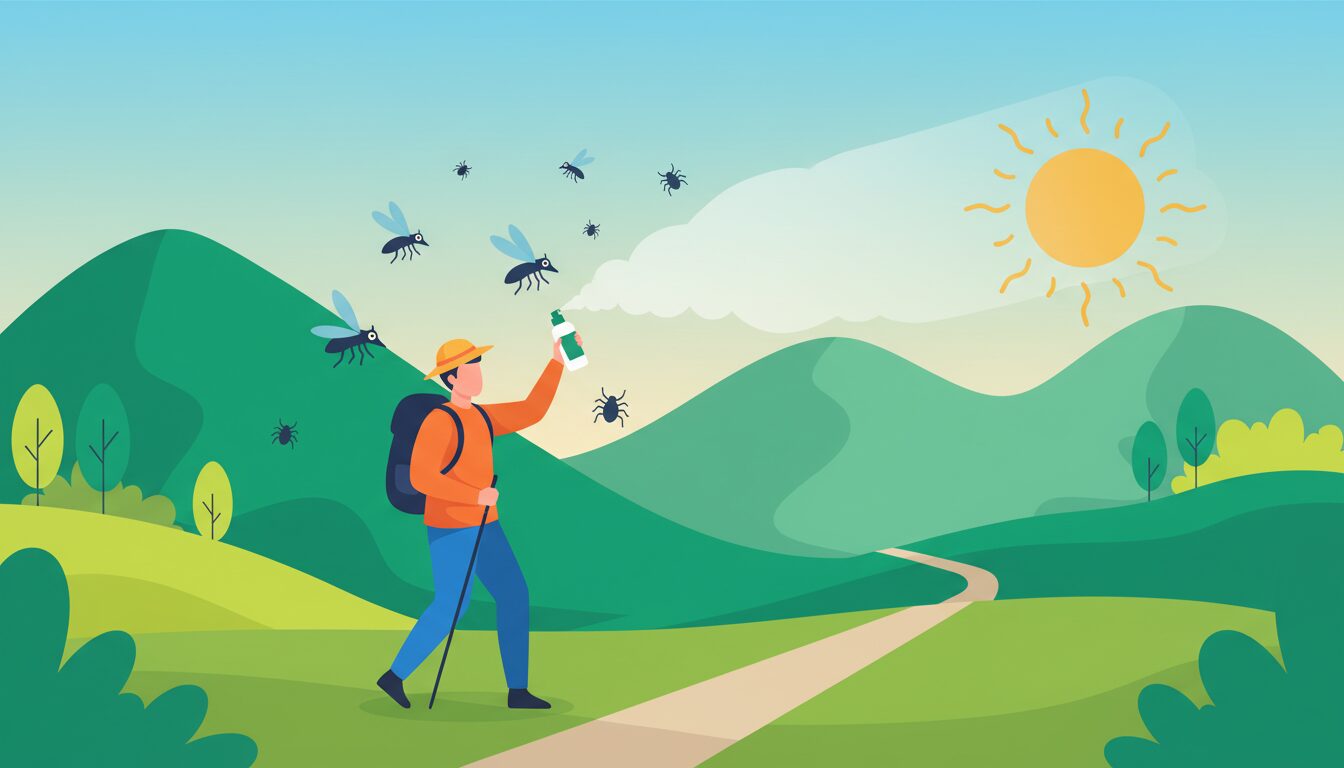
Help prevent the spread of vector borne diseases and always remember your insect repellent when outdoors!
What Does #InsectRepellentAwarenessDay Mean?
Insect Repellent Awareness Day on June 3rd reminds people about the importance of protecting themselves from mosquitoes and ticks that can carry diseases like Zika, Lyme disease, and West Nile virus. It is about being smart when spending time outdoors.
How to Use #InsectRepellentAwarenessDay
Share tips for staying bug-free during outdoor activities, recommend your favorite repellent products, or post facts about vector-borne diseases. Great for outdoor brands, health pages, and camping enthusiasts.
What Is Insect Repellent Awareness Day?
Every year on June 3rd, Insect Repellent Awareness Day serves as a timely reminder that spending time outdoors carries real risks beyond sunburn and dehydration. Mosquitoes, ticks, and other biting insects are vectors for some genuinely serious diseases, and a simple step — applying repellent — can dramatically reduce your exposure. The day was established to cut through the noise of summer plans and refocus attention on personal protection habits that too many people skip.
The timing is deliberate. Early June sits right at the beginning of peak outdoor season across much of North America and Europe, when people are heading to parks, hiking trails, campsites, and backyards in larger numbers. That overlap between human activity and insect activity is exactly when the risk climbs. Awareness Day is about building habits before you need them, not scrambling for a can of repellent after you’ve already been bitten.
The Diseases Behind the Awareness
This isn’t a precaution without teeth. Vector-borne diseases cause hundreds of thousands of illnesses in the United States each year, and globally the numbers are far larger. Ticks are responsible for Lyme disease, the most commonly reported vector-borne illness in the U.S., with well over 400,000 estimated new cases annually. Left untreated, Lyme can cause lasting joint pain, neurological problems, and fatigue that persists for months or years.
Mosquitoes carry their own serious threats. West Nile virus circulates across the continental U.S. every summer, with most infected people experiencing no symptoms but a small percentage developing severe neurological illness. Zika virus, while less active in the U.S. now than during the 2015–2016 outbreak, remains a concern for travelers and poses specific risks during pregnancy. Dengue fever, once considered a tropical disease, has seen locally transmitted cases in Florida and Texas in recent years. The insects are common; the diseases are real.
Beyond North America, malaria remains one of the leading causes of death worldwide, killing hundreds of thousands of people annually. For travelers heading to endemic regions, repellent is not optional — it is a fundamental part of a protection strategy alongside other measures like antimalarial medications and bed nets.
Choosing the Right Repellent
Not all repellents are created equal, and the differences matter. The CDC and EPA both maintain lists of registered, effective active ingredients, and it’s worth knowing what you’re reaching for.
DEET is the most studied and widely used active ingredient, available in concentrations from about 10% to 100%. Higher concentrations extend the duration of protection rather than increasing its strength. Products with 20–30% DEET provide several hours of protection and are considered safe for adults and children over two months of age when used as directed. It has a strong safety record built on decades of use.
Picaridin has become a popular alternative. It is odorless, does not feel greasy on the skin, and does not damage plastics or synthetic fabrics the way DEET can. Studies show it performs comparably to DEET against both mosquitoes and ticks at equivalent concentrations. Many people who dislike the feel or smell of DEET find picaridin a straightforward swap.
Oil of lemon eucalyptus (OLE) is a plant-based option — distinct from plain lemon eucalyptus essential oil — that has EPA registration and good evidence behind it. It is the only plant-based repellent recommended by the CDC for protection against both mosquitoes and ticks. Note that it is not recommended for children under three years old. Products containing the synthesized version, PMD, fall into the same category.
IR3535 is a third synthetic option that appears in many European products and is gaining traction in the U.S. market. Permethrin deserves a separate mention: it is not applied to skin but rather to clothing, gear, and tents. It kills ticks and mosquitoes on contact and remains effective through multiple washes, making it a strong complement to skin-applied repellents for hikers and campers.
Practical Tips for Outdoor Protection
Knowing which repellent to buy is only part of the picture. Application habits matter just as much. A few straightforward guidelines make a real difference in how well any repellent performs.
Apply repellent to all exposed skin, not just areas you think are most at risk. Ticks in particular will find any gap — an ankle, a wrist, the back of the neck. When using sunscreen alongside repellent, apply sunscreen first and let it absorb, then apply repellent over the top. Do not use combination sunscreen-repellent products; sunscreen typically needs to be reapplied more frequently than repellent, and the ratio gets thrown off.
Clothing choices are underrated. Wearing long sleeves and long pants in light colors makes it easier to spot ticks and reduces exposed surface area. Tucking pants into socks is effective even if it looks awkward. After spending time in wooded or grassy areas, do a full body tick check — including behind the knees, under the arms, around the hairline, and in the groin area. Ticks need to be attached for some hours before transmitting most diseases, so finding them early is genuinely protective.
Time of day matters for mosquitoes. Most species that transmit disease are most active at dawn and dusk, though some — including the Asian tiger mosquito that can carry dengue and Zika — feed aggressively during daylight. Eliminating standing water around your home reduces breeding sites. Even a small amount of water in a flower pot saucer, a clogged gutter, or an upturned lid is enough for mosquitoes to breed.
Content Ideas for #InsectRepellentAwarenessDay
June 3rd gives creators a specific peg for content that is both timely and genuinely useful to audiences heading into summer. The topic has real range — from practical how-to posts to broader conversations about outdoor health — and it connects naturally to hiking, camping, gardening, family outdoor activities, and travel content.
Product comparison posts perform well: DEET vs. picaridin vs. OLE is a question many people actually search for, and a clear, no-nonsense breakdown gets shared. Before-and-after tick check tutorials, step-by-step repellent application guides for families with children, and “what’s in my hiking pack” posts that feature repellent as a non-negotiable item all work across formats. Q&A content addressing common myths — like whether eating garlic or taking B vitamins keeps mosquitoes away (the evidence is weak to nonexistent) — tends to generate good engagement because it corrects something people believe.
Personal stories about tick encounters or mosquito-borne illness experiences bring real weight to the topic without being alarmist. Interviews with outdoor enthusiasts, travel nurses, or public health professionals add credibility. Infographic-style content breaking down which insects carry which diseases, mapped by region, can do well in shares because it is genuinely reference-worthy.
Platform Strategy
Each platform has its own strengths for this topic. Here is how to match your content to the channel.
Carousels work exceptionally well here. A 6–8 slide post covering repellent types, application tips, and tick-check steps gives followers something to save and return to. Clean, outdoor-aesthetic photography pairs naturally with the topic. Stories on June 3rd with poll stickers (“Do you always use repellent outdoors?”) drive interaction. Reels showing a quick before-a-hike routine — including repellent application — fit the short educational format the algorithm currently favors.
TikTok
The platform is strong for myth-busting and quick demonstration content. A 30–60 second video answering “is DEET actually safe?” or “how to do a proper tick check” can reach well beyond your existing audience. Dueting or stitching existing outdoor or hiking content with a repellent safety angle is a low-effort way to tap into established communities. The “things you didn’t know” and “outdoor safety” niches have active audiences on TikTok.
Twitter / X
Short, specific facts perform well. Citing current CDC or EPA statistics on Lyme disease cases or West Nile virus activity gives your post credibility and invites retweets from health-adjacent accounts. Thread format works for a deeper breakdown — one tweet per repellent type, or one tweet per disease — letting readers engage at whatever depth they want. Engaging with the hashtag early in the day on June 3rd helps with visibility while the conversation is still building.
Longer-form posts find their audience on Facebook, particularly in groups centered on hiking, camping, family activities, and gardening. A detailed post covering the full protection routine — repellent choice, clothing, tick checks, home prevention — gets saved and shared within communities where outdoor activity is a regular topic. Sharing links to CDC or EPA repellent guidance alongside your own commentary adds value. Facebook Events can also be used to frame June 3rd as a prompt for followers to stock their outdoor kits.
Quick Info
-
Hashtag#InsectRepellentAwarenessDay
-
When to PostJune 3rd
-
Full GuideAvailable below
Related Hashtags
Find More Hashtags
Search across 830+ curated hashtags