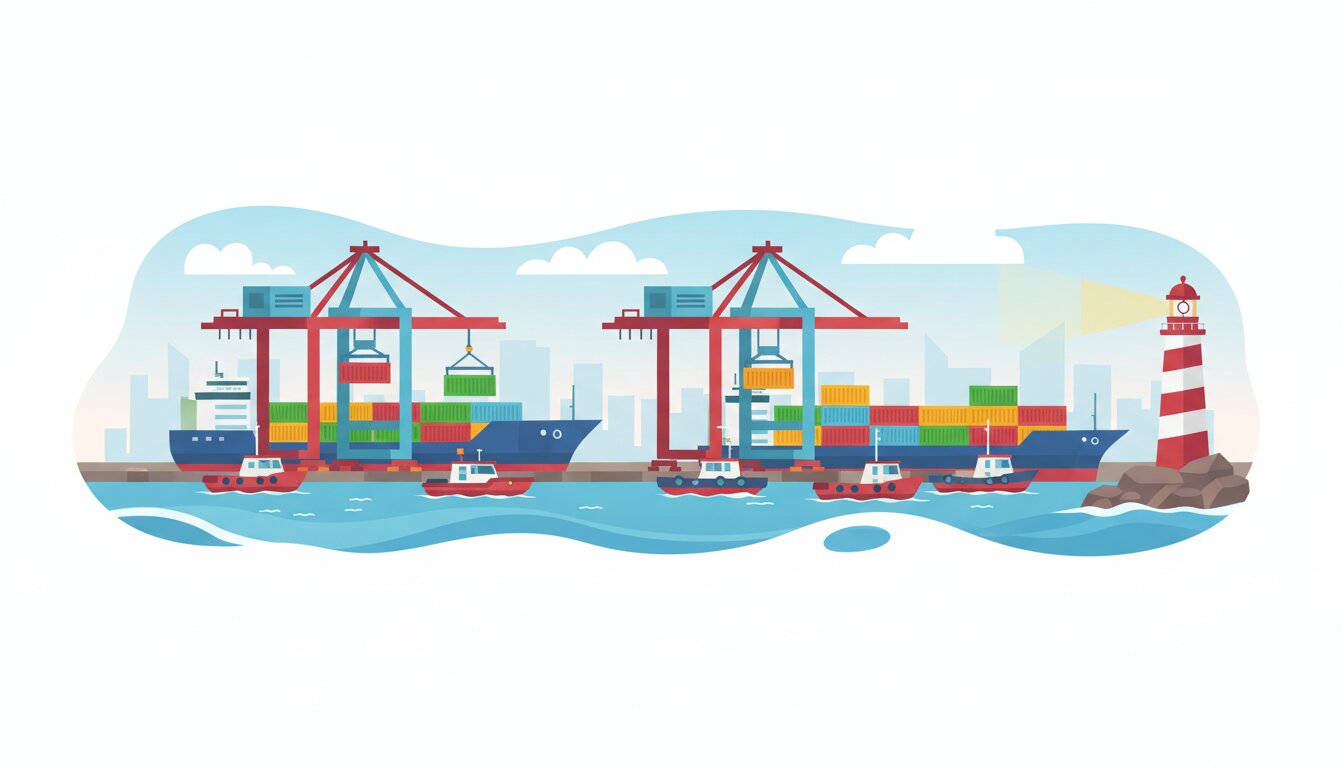
What Is National Maritime Day?
Every May 22nd, the United States pauses to honor the merchant marine and the entire maritime industry that keeps global trade flowing. National Maritime Day has been a federally recognized observance since 1933, when President Franklin D. Roosevelt signed a proclamation marking the date of the SS Savannah's historic 1819 crossing - the first successful transatlantic voyage by a steamship.
But this day is about more than history. Roughly 90% of world trade moves by sea. Every piece of furniture in your living room, every electronic device in your pocket, and a massive chunk of the food on your table traveled across an ocean on a cargo vessel before it reached you. The people who crew those ships, build those ports, and maintain those supply chains rarely get the spotlight - and that is exactly what National Maritime Day aims to fix.
Why #NationalMaritimeDay Matters on Social Media
Maritime hashtags trend strongly on May 22nd because they sit at the intersection of patriotism, industry, and stunning visuals. Cargo ships cutting through open water, sunsets over working ports, tugboats pushing barges - the imagery practically posts itself.
For businesses in logistics, shipping, coastal tourism, or international trade, this is one of the best organic visibility days of the year. But you do not need to be in the industry to participate. Travel bloggers, history buffs, environmentalists focused on ocean health, and even food brands with imported ingredients all have natural angles into the conversation.
- #NationalMaritimeDay - The primary hashtag, used in official government posts and media coverage
- #MaritimeDay - A shorter alternative that works well for character-limited platforms
- #MerchantMarine - Targets the workforce specifically, great for honoring individuals
- #MaritimeIndustry - Broader industry conversations around shipping and trade
Content Ideas That Actually Work
The best Maritime Day posts go beyond a generic "thank you to our sailors" graphic. Here are angles that drive real engagement:
Behind-the-scenes port content. If you have access to a port, shipyard, or vessel, document it. People are fascinated by the scale of container ships and the choreography of loading operations. A 30-second video of a crane stacking containers will outperform a polished graphic almost every time.
Supply chain storytelling. Pick a product you sell or use daily and trace its maritime journey. "This coffee bean traveled 6,400 miles across the Pacific before it hit your mug" is the kind of hook that makes people stop scrolling.
Historical deep cuts. The SS Savannah story is well-known, but maritime history is packed with lesser-known gems. The Liberty ships of WWII, the opening of the Panama Canal, the evolution from sail to steam - any of these make excellent carousel or thread content.
Employee spotlights. If your company employs anyone with a maritime background - veterans of the Navy or merchant marine, port workers, or logistics coordinators - let them tell their story. Personal narratives consistently outperform branded content.
Who Should Be Posting
The obvious players are shipping companies, port authorities, and naval organizations. But some of the strongest Maritime Day content comes from unexpected accounts:
Food and beverage brands can highlight how ingredients travel by sea. Coffee roasters, chocolate makers, and wine importers all have compelling maritime supply chain stories.
Coastal cities and tourism boards can tie their port heritage into the celebration. Historic harbor towns especially have rich material to draw from.
Environmental organizations can use the day to discuss ocean conservation, sustainable shipping practices, and the environmental impact of global trade routes.
Tech companies in logistics can showcase how modern tools like AI routing, satellite tracking, and automated port systems are transforming an ancient industry.
Timing and Platform Strategy
Start posting the morning of May 22nd - the hashtag peaks between 9 AM and 2 PM Eastern as government agencies and major brands publish their official observances. On X (formerly Twitter), pair #NationalMaritimeDay with visual content for maximum reach. On Instagram, carousels showing maritime facts or photo collections of ships perform well. LinkedIn is where the industry professionals gather, so thought leadership pieces about the future of shipping land hardest there.
TikTok and Reels creators can find strong angles in "things you didn't know about shipping" format videos. The sheer scale of modern container ships - some over 1,300 feet long - makes for inherently shareable visual content.
Making It Count Beyond May 22nd
Maritime Day content does not have to be a one-day event. Use it as a launchpad for ongoing content about global trade, ocean conservation, or logistics innovation. The connections you build with maritime-focused accounts on May 22nd can turn into year-round engagement if you keep the conversation going.
Save your best-performing Maritime Day posts and repurpose them for World Oceans Day (June 8), International Day of the Seafarer (June 25), or World Maritime Day (the last Thursday of September). The maritime content calendar is surprisingly full, and audiences who engage with one of these days tend to show up for the others.