Why Composting Deserves Its Own Day
Learn About Composting Day lands on May 29, right when spring gardens are hitting their stride and yard waste is piling up. The timing is intentional. This is the moment when composting clicks for most people - you have the materials, you have the motivation, and the results show up fast in warm weather.
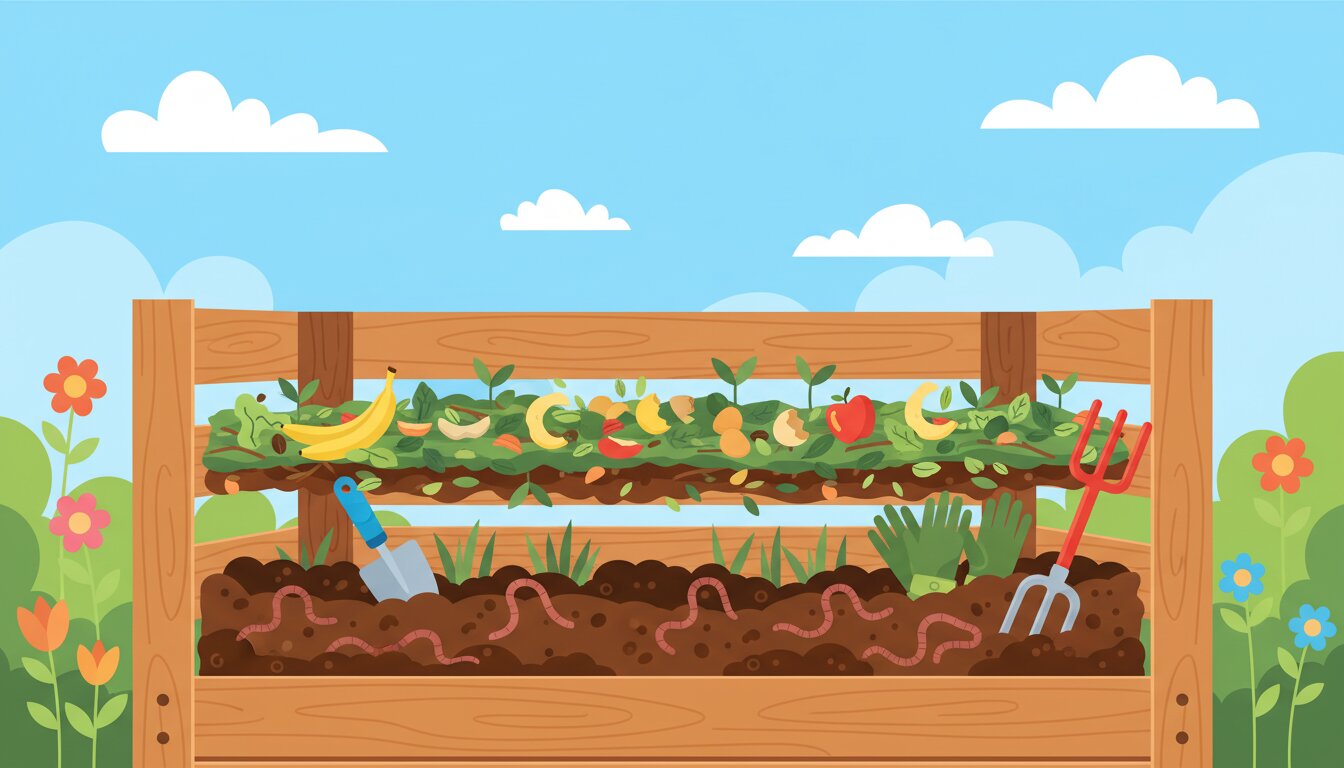
Composting is one of those things that sounds complicated until you actually try it. At its simplest, you are just letting organic matter decompose in a controlled way. Banana peels, coffee grounds, eggshells, leaves, grass clippings - they all break down into rich, dark soil that plants absolutely love.
The Numbers Behind Composting
About 30% of what Americans throw away could be composted instead of sent to a landfill. Food scraps and yard waste make up the single largest category of municipal solid waste. When that organic material ends up in a landfill, it decomposes without oxygen and produces methane - a greenhouse gas roughly 80 times more potent than carbon dioxide over a 20-year period.
Composting at home diverts that waste and turns it into something useful. A single household compost bin can divert 200 to 400 pounds of waste per year from the landfill while producing free fertilizer.
Getting Started Is Easier Than You Think
You do not need a big backyard or fancy equipment. Here are the main approaches:
- Backyard bin - A simple bin or tumbler in the corner of your yard. Layer greens (food scraps, fresh grass) with browns (dry leaves, cardboard, newspaper). Turn it every week or two.
- Vermicomposting - Red wiggler worms in a bin under your kitchen sink. They eat your food scraps and produce castings that are basically garden gold. Works perfectly in apartments.
- Bokashi - A fermentation method using inoculated bran. You can compost meat and dairy with this method, which traditional composting cannot handle well.
- Community programs - Many cities now offer curbside compost pickup or community compost drop-off sites if you do not want to manage a bin yourself.
Content Ideas for Learn About Composting Day
- Compost bin tour - Show your setup, explain your process, and share what you have learned. Beginners especially appreciate seeing real setups, not just stock photos of perfect gardens.
- What can and cannot be composted - This is evergreen content that gets saved and shared constantly. Create a simple graphic or carousel post.
- Time-lapse content - If you have been composting for a while, show the transformation from scraps to finished compost. The visual is compelling.
- Myth-busting - Address common concerns like smell, pests, and space requirements. Most of these fears are overblown with proper technique.
- Impact math - Calculate how much waste you have diverted in a year. Concrete numbers make the environmental benefit tangible and shareable.
Best Hashtags to Pair With #LearnAboutCompostingDay
Use #LearnAboutCompostingDay alongside #Composting, #ZeroWaste, #SustainableLiving, #GardenTips, #EcoFriendly, #ReduceReuseRecycle, #OrganicGardening, and #GreenLiving. For broader reach, add #EnvironmentMatters or #EarthFriendly to connect with the wider sustainability community.