#NationalMoonDay
Post a photo of the moon in celebration of the first human landing on that giant ambient orb.
What Does #NationalMoonDay Mean?
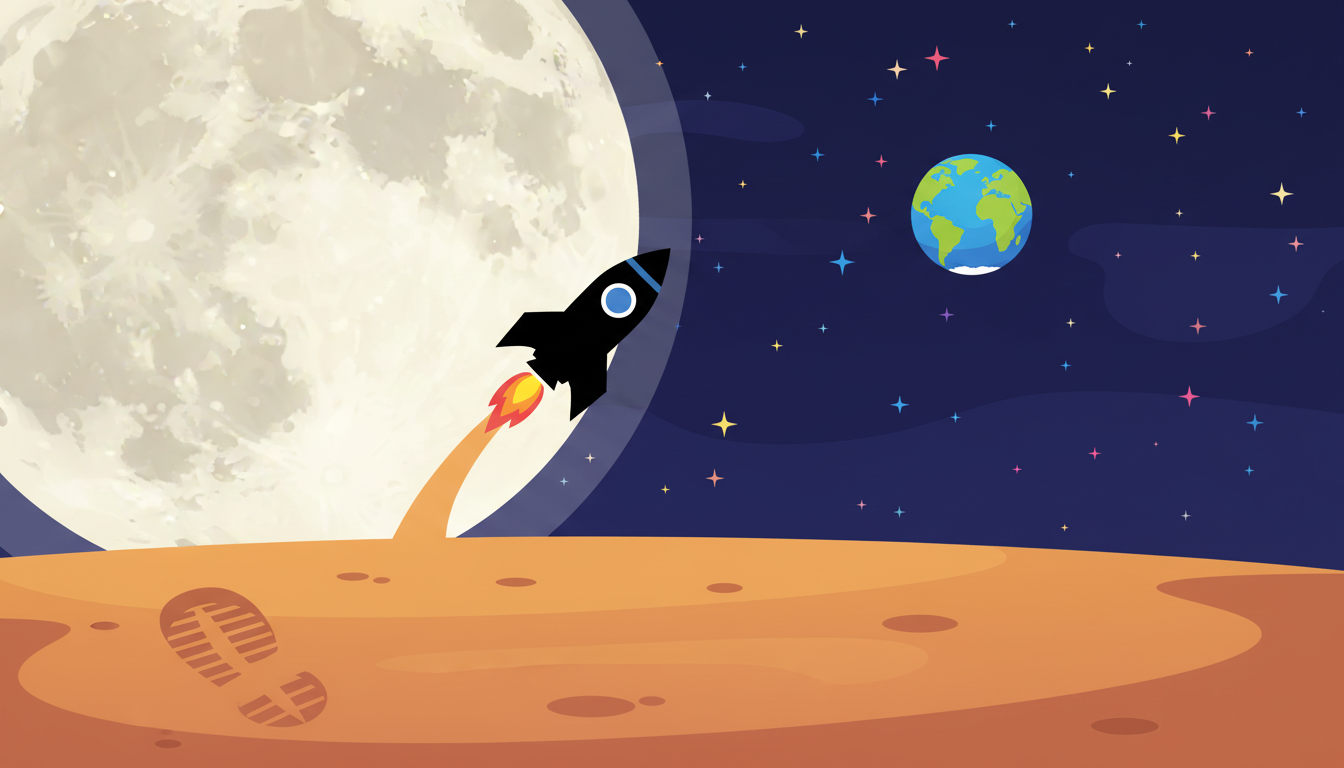
National Moon Day on July 20th commemorates the Apollo 11 moon landing in 1969, when Neil Armstrong and Buzz Aldrin became the first humans to walk on the lunar surface. The day celebrates space exploration, scientific achievement, and humanity's capacity to reach beyond what seems possible.
How to Use #NationalMoonDay
Share a photo of the moon, space exploration facts, or reflect on scientific achievements. Works well for science educators, astronomy enthusiasts, and anyone inspired by space.
The Day We Touched the Moon
National Moon Day on July 20th marks the anniversary of one of the most watched events in human history. On that date in 1969, Apollo 11 commander Neil Armstrong stepped off the lunar module Eagle and onto the surface of the moon. About 600 million people watched the grainy footage live on television - roughly 20% of the world's population at the time. Buzz Aldrin followed about 20 minutes later. Michael Collins orbited above in the command module, making him the most isolated human being who ever lived, completely alone on the far side of the moon with no radio contact.
The mission lasted just 8 days total, and the moonwalk itself was only about two and a half hours. In that time, Armstrong and Aldrin planted an American flag, collected 47.5 pounds of lunar samples, set up scientific instruments, and took the photographs that became some of the most iconic images of the 20th century. The plaque they left behind reads: "Here men from the planet Earth first set foot upon the Moon, July 1969 A.D. We came in peace for all mankind."
Moon Facts That Still Blow Minds
The moon is about 238,900 miles from Earth on average, though that distance varies because its orbit is elliptical. Light takes about 1.3 seconds to travel between the two. The moon is slowly drifting away from us - about 1.5 inches per year - which means it was much closer and appeared much larger in the sky millions of years ago. In about 600 million years, it will be too far away to produce total solar eclipses.
Its surface area is roughly the same size as Africa. The dark patches you see when you look up - the ones that form the "man in the moon" - are ancient volcanic plains called maria, filled with basalt from eruptions that happened billions of years ago. The craters covering the rest of the surface are impact scars, and since the moon has no atmosphere, no wind, and no water erosion, those craters essentially last forever. The footprints Armstrong and Aldrin left in 1969 are still there, completely undisturbed.
Temperature swings on the lunar surface are extreme. During the two-week-long lunar day, surface temperatures reach about 260 degrees Fahrenheit. During the equally long lunar night, they plunge to minus 280 degrees. The Apollo astronauts landed during the lunar morning when temperatures were more moderate, but their suits still had to handle conditions no human had ever faced outside a spacecraft.
The New Moon Race
Space exploration has seen a massive resurgence in the 2020s. NASA's Artemis program aims to return astronauts to the lunar surface, with plans for a sustained presence including a lunar space station called Gateway. China's Chang'e program has already landed rovers on the far side of the moon - something no other nation has done. India's Chandrayaan-3 successfully landed near the lunar south pole in 2023, making India the fourth country to achieve a soft moon landing.
Private companies are in the mix now too. SpaceX's Starship is contracted as the Artemis lunar lander. Several companies have attempted commercial lunar landings with varying degrees of success. The moon is also at the center of discussions about space resources - lunar ice at the poles could provide water, oxygen, and even rocket fuel for future missions deeper into space. Some estimates suggest the permanently shadowed craters at the south pole contain over 600 million metric tons of water ice.
How to Use #NationalMoonDay on Social Media
July 20th brings out space enthusiasts, science educators, photographers, and brands looking to tap into the wonder of space exploration. The content that works best tends to fall into a few categories: moon photography (always a hit on Instagram), space history facts and throwback Apollo footage, science content for educators, and aspirational posts about reaching for big goals.
Moon photography posts perform especially well. Even a smartphone photo of a full moon gets engagement when paired with the hashtag on the right day. For better results, share tips on how to photograph the moon - most people don't realize their phone cameras struggle with it because of auto-exposure. Accounts that post side-by-side comparisons of phone vs. telescope shots tend to go viral in space photography communities.
For brands, the metaphor writes itself. "Shoot for the moon" messaging works for goal-setting, product launches, or company milestones. Educational accounts can share Apollo mission facts, moon science, or information about upcoming lunar missions. Science museums and planetariums should absolutely be posting - this is their Super Bowl.
Use #NationalMoonDay as your primary hashtag and supplement with #MoonDay, #Apollo11, #SpaceExploration, and #Astronomy. If there's a notable lunar event near July 20th - a supermoon, eclipse, or conjunction - tie those together for compounded reach.
Build a mid-summer content series with nearby hashtags: #GiveSomethingAwayDay falls on July 15th, #NationalCousinsDay comes on July 24th, and #NationalLipstickDay lands on July 29th.
Related Hashtags
More July hashtags to explore: #FrenchFriesDay (July 13), #GiveSomethingAwayDay (July 15), #NationalCousinsDay (July 24), and #NationalLipstickDay (July 29).
Quick Info
-
Hashtag#NationalMoonDay
-
When to PostJuly 20th
-
Full GuideAvailable below
Related Hashtags
Find More Hashtags
Search across 830+ curated hashtags