#NationalLookAlikeDay
Have some fun and make yourself look like someone else today! It's Look Alike day!
What Does #NationalLookAlikeDay Mean?
National Look Alike Day on April 20th is a fun day where people dress up as someone else or point out their celebrity doppelgangers. Whether you look like a famous actor or your coworker's twin, it's a playful excuse to have some fun with appearances.
How to Use #NationalLookAlikeDay
Post a side-by-side of yourself and your celebrity look-alike. Dress up as someone famous and share the results. Ask followers who they get told they look like - it always sparks great conversations.
The Psychology of Why We See Doubles Everywhere
National Look Alike Day on April 20th taps into something deeply hardwired in the human brain. We are pattern-recognition machines, and faces are our specialty. Newborns just minutes old preferentially track face-like patterns over other shapes. By adulthood, a region of the brain called the fusiform face area has become so specialized that it can distinguish between thousands of individual faces - and it is constantly, involuntarily searching for matches.
That is why celebrity doppelganger posts consistently dominate social media on this day. Your brain is doing the comparison whether you want it to or not. But the science behind facial similarity is stranger and more interesting than most people realize.
Your Face Is Not as Unique as You Think
In 2015, photographer Francois Brunelle finished a 12-year project called "I'm Not a Look-Alike!" photographing pairs of unrelated strangers who looked remarkably similar. The images were striking - pairs that could easily pass for siblings or even twins. But it was a 2022 study in Cell Reports that turned those visual observations into hard science.
Researchers at the Josep Carreras Leukaemia Research Institute in Barcelona recruited pairs of unrelated look-alikes who had been identified by Brunelle's project and analyzed their DNA. They found that many of the pairs shared significant genetic variants - not because they were related, but because the human genome has a finite number of ways to build a face. With nearly 8 billion people on the planet, the combinations are bound to repeat.
The study went further. It found that the look-alike pairs did not just share facial features. They also showed similarities in weight, height, and even behavioral traits like smoking habits. Shared genetics were driving both the physical resemblance and some lifestyle tendencies. Your doppelganger might not just look like you - they might act a bit like you too.
The Celebrity Doppelganger Effect
The reason people love finding their celebrity look-alike is rooted in something psychologists call the mere exposure effect. We feel positively toward faces we see frequently, and celebrity faces are among the most frequently viewed faces in modern life. Being told you resemble someone famous triggers a small burst of positive association - your brain transfers some of the familiarity and warmth it feels toward that celebrity onto your own self-image.
There is a flip side, though. A 2019 study in the British Journal of Psychology found that people rate their own facial attractiveness about 20% higher than strangers rate it. We are all walking around with a slightly inflated mental image of our own faces, which is why the celebrity comparisons we make for ourselves tend to be more flattering than the ones other people make for us.
The internet has supercharged this phenomenon. Before social media, you might hear that you looked like someone famous from a friend at a party. Now face-matching apps and AI tools can scan your features and spit out a celebrity comparison in seconds. These tools work by measuring the distances between facial landmarks - the ratio of eye spacing to nose width, the angle of the jawline, the proportions of the forehead. They are essentially doing what your fusiform face area does, but with quantified measurements.
Famous Doubles Throughout History
Look-alikes have caused real problems throughout history. During World War II, British intelligence recruited actor M.E. Clifton James to impersonate General Bernard Montgomery as part of Operation Copperhead, a deception campaign before D-Day. James toured North Africa and the Mediterranean as "Monty" to mislead German intelligence about Allied invasion plans. He later wrote a book about the experience, and it was adapted into a 1958 film where James played both himself and Montgomery.
In the 16th century, Martin Guerre left his French village for years, and a man named Arnaud du Tilh showed up claiming to be him. Du Tilh lived as Guerre for three years, fooling the man's own wife, family, and neighbors. The deception only collapsed when the real Martin Guerre returned. The case became one of the most famous identity fraud stories in European history and spawned multiple books and films.
More recently, the internet has discovered pairs that seem impossible. A photograph of an unidentified man from the 1870s went viral because of his uncanny resemblance to actor Nicolas Cage, spawning thousands of "Nicolas Cage is a vampire" memes. Keanu Reeves has a similar collection of historical look-alikes, including a 19th-century French actor named Paul Mounet. These are coincidences, but they demonstrate just how limited the range of human facial variation actually is.
How to Win National Look Alike Day on Social Media
The format that performs best on this day is the side-by-side comparison. Put your photo next to the celebrity or historical figure you supposedly resemble and let people weigh in. The posts that get the most engagement are not the perfect matches - they are the funny, slightly delusional ones. Your friend who insists he looks like Brad Pitt when he clearly does not will get more comments than someone who actually does resemble a celebrity.
Group content works well too. Get your coworkers or friend group to all share their celebrity doppelgangers. Offices and teams can turn it into a guessing game - post the celebrity photos and have people match them to the right team member. It is low-effort content that generates genuine interaction.
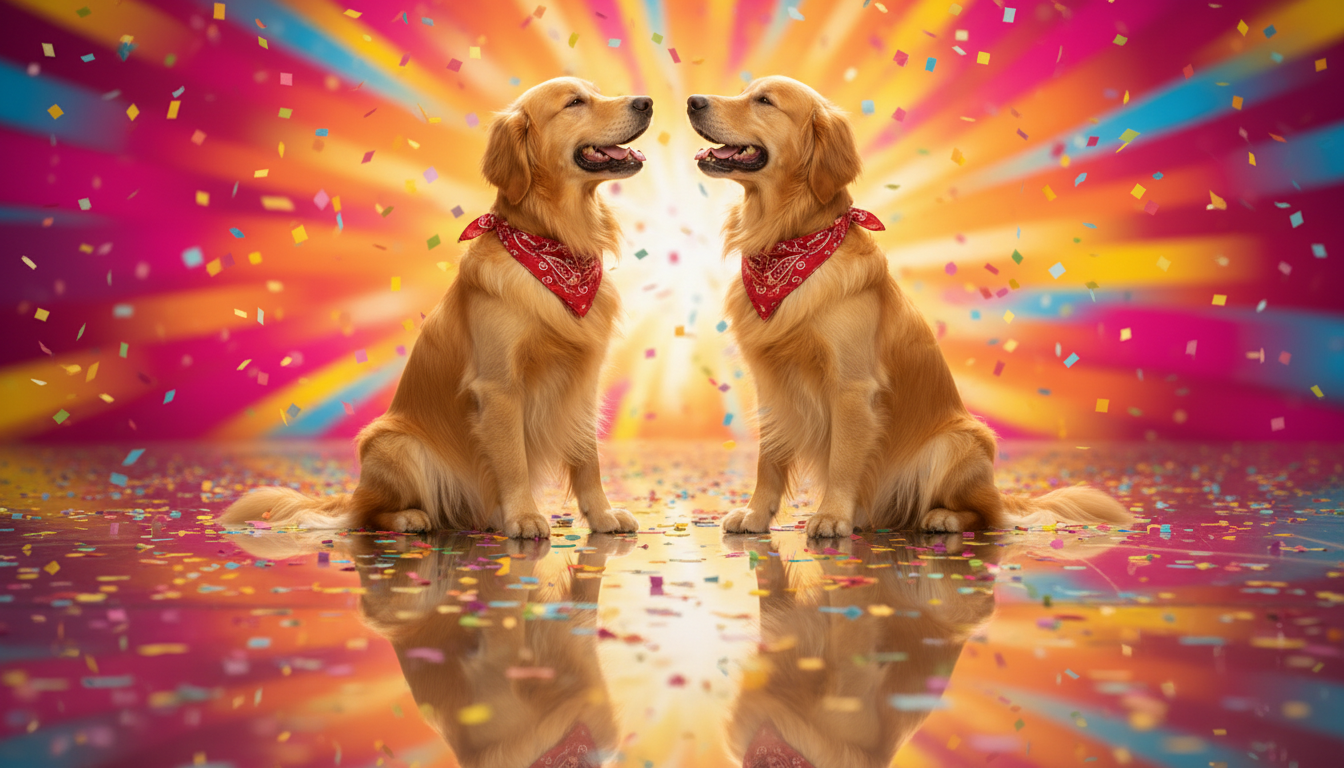
Pet look-alikes are an underrated angle. Dogs that resemble their owners, cats that look like celebrities, animals that look like other animals - these posts consistently outperform human look-alike content because they combine two things the internet loves: faces and animals.
Related Hashtags
Looking for more hashtags to use on April 20th? Check out #ChineseLanguageDay and #VolunteerRecognitionDay, which share the same date. For another fun personality-driven hashtag, see #NameYourselfDay on April 9th and #NationalPetDay on April 11th.
Quick Info
-
Hashtag#NationalLookAlikeDay
-
When to PostApril 20th
-
Full GuideAvailable below
Related Hashtags
Find More Hashtags
Search across 830+ curated hashtags