#NationalNoHouseworkDay
Leave the towel on the bathroom floor and the dishes in the sink, it's National No Housework Day.
What Does #NationalNoHouseworkDay Mean?
National No Housework Day on April 7th gives everyone permission to skip the chores for a full 24 hours. No dishes, no laundry, no vacuuming. It's a lighthearted reminder that rest is productive too, and that the mess will still be there tomorrow.
How to Use #NationalNoHouseworkDay
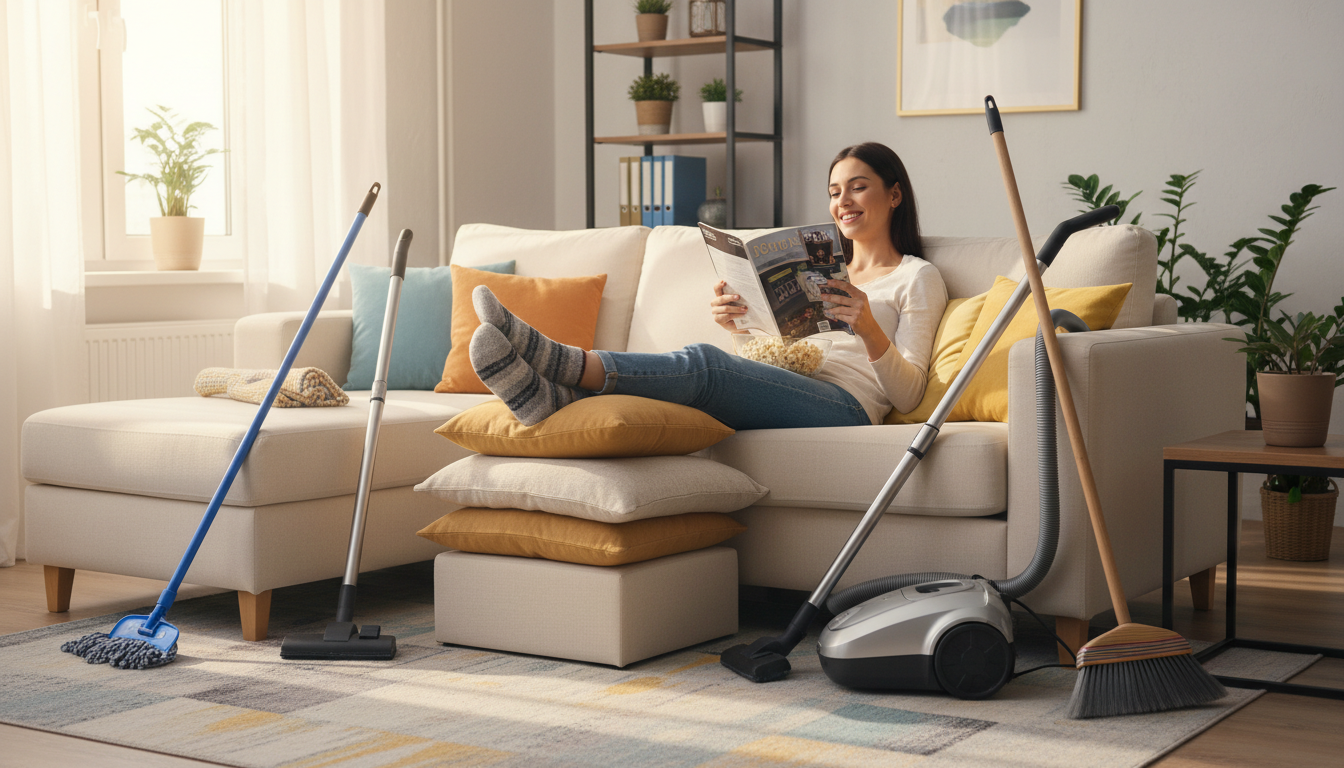
Post a photo of yourself relaxing while the house is a mess. Share what you're doing instead of housework. Parents especially love this one - it's relatable content that gets likes and comments.
What Is National No Housework Day?
National No Housework Day falls on April 7th, and it means exactly what it sounds like - put down the broom, close the dishwasher, and step away from the laundry pile. For one full day, you have official permission to let the house be a house. Dust bunnies can wait. The dishes aren't going anywhere. And that weird sock behind the dryer? It'll still be there tomorrow.
The holiday doesn't have a single confirmed creator, but it's been floating around unofficial holiday calendars since at least the early 2000s. What makes it stick is how universal the feeling is. Almost everybody does housework, and almost nobody would say they love it. A 2023 Bureau of Labor Statistics American Time Use Survey found that the average American spends about 1.8 hours per day on household activities. That adds up to roughly 657 hours a year - more than 27 full days spent cleaning, organizing, and maintaining spaces that somehow get messy again by Wednesday.
A Short History of Hating Housework
Humans have been grumbling about domestic chores for as long as there have been domestic spaces to maintain. Ancient Roman households relied on enslaved people to manage the cleaning and cooking, while medieval European households divided labor by strict social roles. The idea that housework was "women's work" got firmly cemented during the Victorian era, when the cult of domesticity turned homemaking into a moral obligation.
The 20th century brought a strange twist. Labor-saving appliances - vacuum cleaners, washing machines, dishwashers - were supposed to free people from drudgery. And in some ways they did. But sociologist Ruth Schwartz Cowan argued in her 1983 book "More Work for Mother" that these tools actually raised cleanliness standards so much that the total time spent on housework barely changed. You weren't hand-wringing sheets anymore, but now you were expected to wash them twice a week instead of once a month.
By the 1970s and 1980s, housework had become a genuinely political topic. The Wages for Housework movement, started by Selma James and Mariarosa Dalla Costa in 1972, argued that domestic labor was real work that deserved real compensation. That idea never went mainstream, but it planted the seed for decades of conversation about who does what at home and why.
The Science of Stepping Back
Taking a day off from chores isn't just lazy - there's real psychology behind it. Research published in the Personality and Social Psychology Bulletin found that people who live in cluttered, unfinished spaces report higher cortisol levels throughout the day. But the flip side is also true. Constant cleaning and maintenance creates its own stress loop, especially when the work feels never-ending. A break from the cycle can reset your relationship with your space.
Dr. Sherrie Bourg Carter, a psychologist who studies burnout, has written about how task-oriented people often struggle to relax because their brains keep scanning for the next thing to fix. A designated "no housework" day short-circuits that pattern by giving you external permission to stop. It sounds simple, but for people who feel guilty sitting down while the sink is full, that permission matters.
There's also the productivity angle. The Zeigarnik effect - a psychological principle discovered by Bluma Zeigarnik in the 1920s - says that unfinished tasks stick in your memory and create mental tension. But intentionally choosing to leave something undone (rather than forgetting about it) actually reduces that tension. When you decide the dishes are tomorrow's problem, your brain lets go of them.
How Americans Really Feel About Cleaning
The numbers on housework are kind of fascinating. A 2022 YouGov poll found that 28% of Americans say they enjoy cleaning, while 22% actively dislike it. The rest land somewhere in the middle - they don't mind it, but they wouldn't choose it over almost any other activity. The chore people hate most? Cleaning the bathroom. The one they mind least? Cooking, which many people consider more hobby than chore.
Division of labor at home has shifted over the decades but still isn't even. According to Pew Research Center data from 2023, women in heterosexual partnerships spend an average of 4.6 hours per day on unpaid domestic work, compared to 2.8 hours for men. That gap has narrowed significantly since the 1960s (when men averaged 0.5 hours), but it's still there. National No Housework Day, in a small way, puts everyone on equal footing - nobody cleans.
What to Do Instead
The beauty of this holiday is that it's defined entirely by what you don't do. But if you need ideas for filling those reclaimed hours, here are some options people love. Go outside. Read a book you've been putting off. Binge a show without folding laundry at the same time. Cook something elaborate just because you want to (and leave the pots for tomorrow). Call a friend. Take a nap on the couch surrounded by yesterday's throw blankets.
Some families turn it into a game - whoever mentions a chore first has to do it on April 8th. Others go full commitment and leave the house entirely, heading to a park or restaurant so the mess can't tempt them. The point isn't to be slovenly. It's to remember that your worth isn't measured by how clean your countertops are.
Using #NationalNoHouseworkDay on Social Media
This hashtag is pure engagement bait in the best way. People love sharing photos of their intentionally messy houses, their "no cleaning" outfits, and their plans for doing absolutely nothing productive. Before-and-after shots work great, except you only post the "before" and promise the "after" is tomorrow's problem. Parents dominate this hashtag because the contrast between their usual cleaning schedule and one day of freedom makes for relatable, funny content.
Brands that sell cleaning products sometimes join in with tongue-in-cheek posts - "We'll be here when you need us tomorrow." Lifestyle bloggers use the day to talk about cleaning burnout and realistic home maintenance schedules. And real estate accounts occasionally jump in with "houses that sell themselves" content. Pair it with #NoHouseWorkDay, #ChoresFreeDay, or #SelfCareSunday if the 7th falls on a weekend.
Related Hashtags
Looking for more hashtags for April 7th? Check out #NationalBeerDay, #CoffeeCakeDay, #InternationalBeaverDay, and #WorldHealthDay.
Quick Info
-
Hashtag#NationalNoHouseworkDay
-
When to PostApril 7th
-
Full GuideAvailable below
Related Hashtags
Find More Hashtags
Search across 830+ curated hashtags