#NationalSorryCharlieDay
Ever been turned down? Ditched at the altar? Share your story of rejection because it's National Sorry Charlie Day.
What Does #NationalSorryCharlieDay Mean?
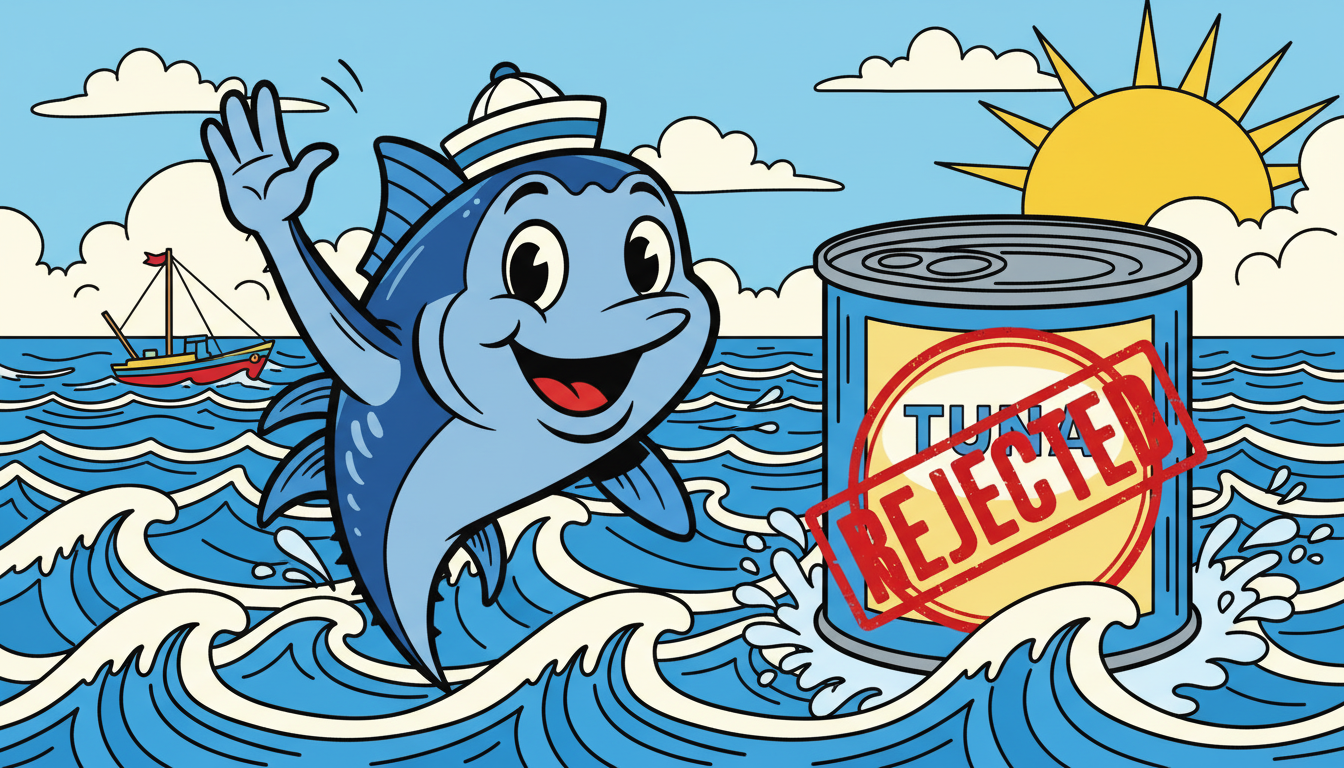
National Sorry Charlie Day on April 6th is all about embracing rejection with a sense of humor. The name comes from the StarKist Tuna mascot Charlie, who was constantly told "Sorry, Charlie" when he tried to get chosen. The day encourages people to share their rejection stories and laugh about them, because everyone has been told no at some point.
How to Use #NationalSorryCharlieDay
Share a lighthearted story about a time you were rejected - a job interview, a date, a pitch that flopped. Keep it funny and relatable. Ask your followers to share their own "Sorry Charlie" moments.
Where Does “Sorry Charlie” Come From?
If you have ever been turned down and someone said “Sorry, Charlie,” you can thank a cartoon tuna for that. The phrase comes from StarKist’s advertising campaign that launched in 1961, featuring a hip, beret-wearing tuna named Charlie who desperately wanted to be caught by StarKist. Charlie would try all kinds of sophisticated approaches - writing poetry, playing instruments, showing off his refined taste - but the company always rejected him with the same line: “Sorry, Charlie. StarKist doesn’t want tuna with good taste. StarKist wants tuna that tastes good.”
The campaign ran for decades and Charlie became one of the most recognized advertising mascots in American history. The phrase “Sorry, Charlie” entered everyday language as a gentle way to deliver a rejection. It softened the blow with humor, which is probably why it stuck around long after most people forgot where it originated. By the time National Sorry Charlie Day came along, the expression had taken on a life far beyond canned fish.
The Art of Handling Rejection
Here is the thing about rejection that nobody tells you when you are young: the people who succeed the most are usually the ones who have been rejected the most. That is not motivational poster fluff - it is just math. The more you put yourself out there, the more nos you collect along with the yeses. J.K. Rowling got rejected by 12 publishers before Harry Potter found a home. Decca Records passed on The Beatles in 1962, telling their manager that guitar groups were on the way out. Walt Disney was fired from a newspaper job because his editor said he “lacked imagination and had no good ideas.”
What makes rejection sting is that it feels personal, even when it is not. A publisher rejecting a manuscript is making a business decision. A person turning down a date might just not be in a place for dating. An employer choosing another candidate probably had internal reasons you will never know about. The rejection feels like a verdict on who you are, but it is almost always a verdict on timing, fit, or circumstances.
Why We Made a Holiday Out of It
National Sorry Charlie Day lands on April 6th, and it is one of those quirky observances that gives people permission to laugh at something that usually hurts. The idea is simple: share your rejection stories, find the humor in them, and realize that everybody has a pile of nos behind whatever successes they have achieved. Social media runs with this concept naturally because vulnerability mixed with humor is exactly the kind of content that resonates.
The best posts for this day tend to be the ones where people share specific rejection stories rather than generic advice about bouncing back. The time you got a form rejection letter with your name spelled wrong. The job interview where you showed up on the wrong day. The college that rejected you and then accidentally sent a congratulations email the next week. These stories connect because they are real and slightly absurd, and everyone reading them has their own version.
How to Use #SorryCharlieDay on Social Media
This hashtag works well for both personal and brand accounts. For personal posts, pick your best rejection story and tell it with some distance and humor. The key is that it should be a story you are genuinely over, not something that still stings. Nobody wants to read a bitter rant disguised as a funny anecdote - people can tell the difference.
For brands, this is a chance to be self-deprecating and human. Share a time the company tried something that flopped. A product nobody bought. A marketing campaign that bombed. Audiences love seeing brands acknowledge failure because it feels honest in a space where everything is usually polished to within an inch of its life. Just keep it light - the goal is a shared laugh, not a crisis communications exercise.
The Science of Bouncing Back
Psychologists have a term for the ability to recover from rejection: ego resilience. Research from the University of Michigan found that people who practice self-compassion after rejection - treating themselves with the same kindness they would show a friend - recover faster and are more likely to try again. The worst thing you can do after a rejection is spiral into self-criticism, because that turns a single no into evidence for a permanent verdict about your worth.
There is also something called rejection sensitivity, which varies widely from person to person. Some people can shrug off a rejection in minutes. Others carry it for weeks. If you fall on the more sensitive end, that is not a character flaw - it usually just means you care deeply about connection and approval, which can be a strength in the right context. The trick is learning to sit with the discomfort instead of avoiding situations where rejection is possible, because avoidance shrinks your world faster than rejection ever could.
Related Hashtags
If #SorryCharlieDay resonated with you, explore these related tags: #AprilFoolsDay is another lighthearted April celebration, #InternationalJokeDay keeps the humor going, and #NationalTellAJokeDay is perfect for sharing laughs. For a more uplifting spin, check out #EncourageAYoungWriterDay.
Quick Info
-
Hashtag#NationalSorryCharlieDay
-
When to PostApril 6th
-
Full GuideAvailable below
Related Hashtags
Find More Hashtags
Search across 830+ curated hashtags