#NationalOneCentDay
Time to cash in your jar of pennies, it's National One Cent Day again!
What Does #NationalOneCentDay Mean?
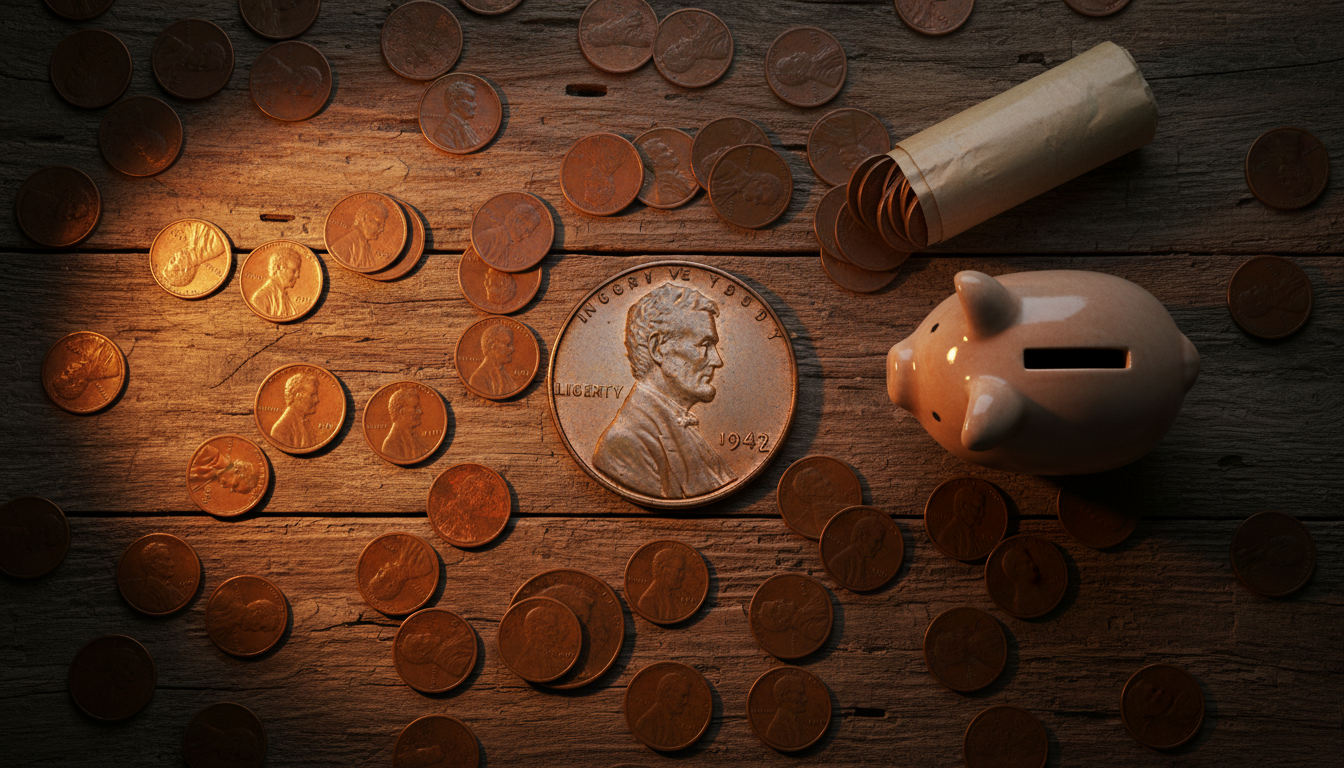
National One Cent Day on April 1st celebrates the humble penny and its place in American history. The one-cent coin has been in circulation since 1787, making it one of the oldest coins still in use. There's ongoing debate about whether the penny should be retired since it costs more to make than it's worth.
How to Use #NationalOneCentDay
Share a fun fact about pennies, post a photo of your penny jar, or weigh in on the "should we keep the penny?" debate. Financial accounts can share money-saving tips. The quirky nature of this day makes for good conversation-starter posts.
The Penny That Costs More Than a Penny
National One Cent Day lands on April 1st — yes, April Fools' Day — and the coincidence feels almost too perfect. Because the American penny is, depending on who you ask, either a beloved symbol of everyday thrift or the most absurd coin still in circulation. Here's the punchline: it costs the U.S. Mint roughly 3.07 cents to produce a single one-cent coin. The government literally loses money every time it makes money.
That financial paradox has fueled a decades-long debate about whether the penny should be retired. Canada did it in 2013. Australia phased out its one- and two-cent coins in 1992. New Zealand dropped them even earlier. But the U.S. penny hangs on, stubbornly rattling around in cup holders and couch cushions across the country, and April 1st is the day we celebrate its persistence.
A Coin Older Than the Constitution
The first U.S. one-cent coin was minted in 1787 — the Fugio cent, designed with input from Benjamin Franklin. It featured a sundial with the motto "Mind Your Business," which was less about privacy and more about industriousness. The coin has been redesigned dozens of times since then, cycling through various depictions of Lady Liberty before Abraham Lincoln took over the obverse in 1909, marking the centennial of his birth.
Lincoln's face on the penny was actually a big deal at the time. It was the first U.S. coin to feature a real historical person rather than an allegorical figure. Theodore Roosevelt commissioned the design from sculptor Victor David Brenner, and it caused a minor controversy — partly because Brenner's initials (V.D.B.) appeared prominently on the reverse, and partly because some Americans felt it was too monarchical to put a president on everyday currency.
The reverse side has changed multiple times too. The original wheat ears design (1909–1958) gave way to the Lincoln Memorial (1959–2008), then four special bicentennial designs in 2009, and finally the Union Shield that's been on there since 2010. If you've got a jar of pennies at home, you're holding a little timeline of American design history.
The Great Penny Debate
The "should we abolish the penny" argument touches economics, nostalgia, and even charity. Economists generally lean toward elimination. The coin costs more to make than it's worth, transactions would simply round to the nearest nickel (which studies show has a negligible effect on consumers), and the U.S. Mint could redirect resources toward more useful denominations.
But penny supporters have ammunition too. The zinc industry — pennies have been 97.5% zinc since 1982 — lobbies hard to keep them in production. Charitable organizations worry that "penny drives" and coin donation boxes would suffer. And there's a psychological element: prices ending in .99 feel meaningfully cheaper than rounding up to the next dollar, and eliminating pennies might erode that pricing convention.
Then there's the sentimental case. "Find a penny, pick it up" is embedded in American culture. Penny wishes in fountains. Penny slots. "A penny for your thoughts." The coin punches above its weight in idioms and traditions, even as its purchasing power has become essentially zero. In 1913, a penny could buy what roughly 31 cents buys today.
How to Use #NationalOneCentDay for Content
Finance and money accounts: This is your day. Break down the economics of penny production, share the history of U.S. currency, or poll your audience: keep the penny or ditch it? The debate angle alone can drive hundreds of comments. You can also tie it into broader money-saving content — "things that still cost a penny" or "what a penny bought in every decade."
History and trivia accounts: The penny's story intersects with Benjamin Franklin, Abraham Lincoln, Theodore Roosevelt, two world wars (pennies were made of steel in 1943 because copper was needed for ammunition), and ongoing political lobbying. Pick any angle and you've got a post.
Collectors and numismatics: Highlight rare pennies worth serious money. The 1943 copper penny (a mistake — they were supposed to be steel that year) has sold for over $200,000 at auction. The 1909-S V.D.B. Lincoln cent, the 1955 doubled die — there's a whole world of valuable pennies hiding in ordinary pocket change.
Brands and small businesses: Run a one-cent promotion. "Add any item for a penny." It's a low-risk way to drive engagement and it ties directly into the holiday. The April Fools' Day overlap also gives you room to be playful — fake-announce that your products now only cost one cent, then reveal the real (modest) promotion.
General creators: The visual possibilities are surprisingly rich. Penny floors, penny art, penny-stacking challenges, the satisfying sound of dumping a coin jar — all of it performs well on short-form video. If you're stumped, just ask your audience what they do with their pennies. Everyone has an opinion.
Hashtag Strategy
Pair #NationalOneCentDay with #OneCentDay as your primary tags. Since it falls on April 1st, you can layer in #AprilFools or #AprilFoolsDay if your content has a humorous angle — just make sure the penny content doesn't get lost in the April Fools' noise. Add niche-specific tags like #CoinCollecting, #Numismatics, #MoneyTips, #FinancialHistory, or #PennyForYourThoughts depending on your angle. For broader reach, include #FunFacts, #TodayInHistory, or #DidYouKnow.
Related Hashtags
Looking for more hashtag ideas? Check out #PiDay for another quirky celebration, #NationalPotatoChipDay for fun food content, or #StarWarsDay for another beloved niche holiday. Browse all our hashtag collections for any day of the year.
Quick Info
-
Hashtag#NationalOneCentDay
-
When to PostApril 1st
-
Full GuideAvailable below
Related Hashtags
Find More Hashtags
Search across 830+ curated hashtags