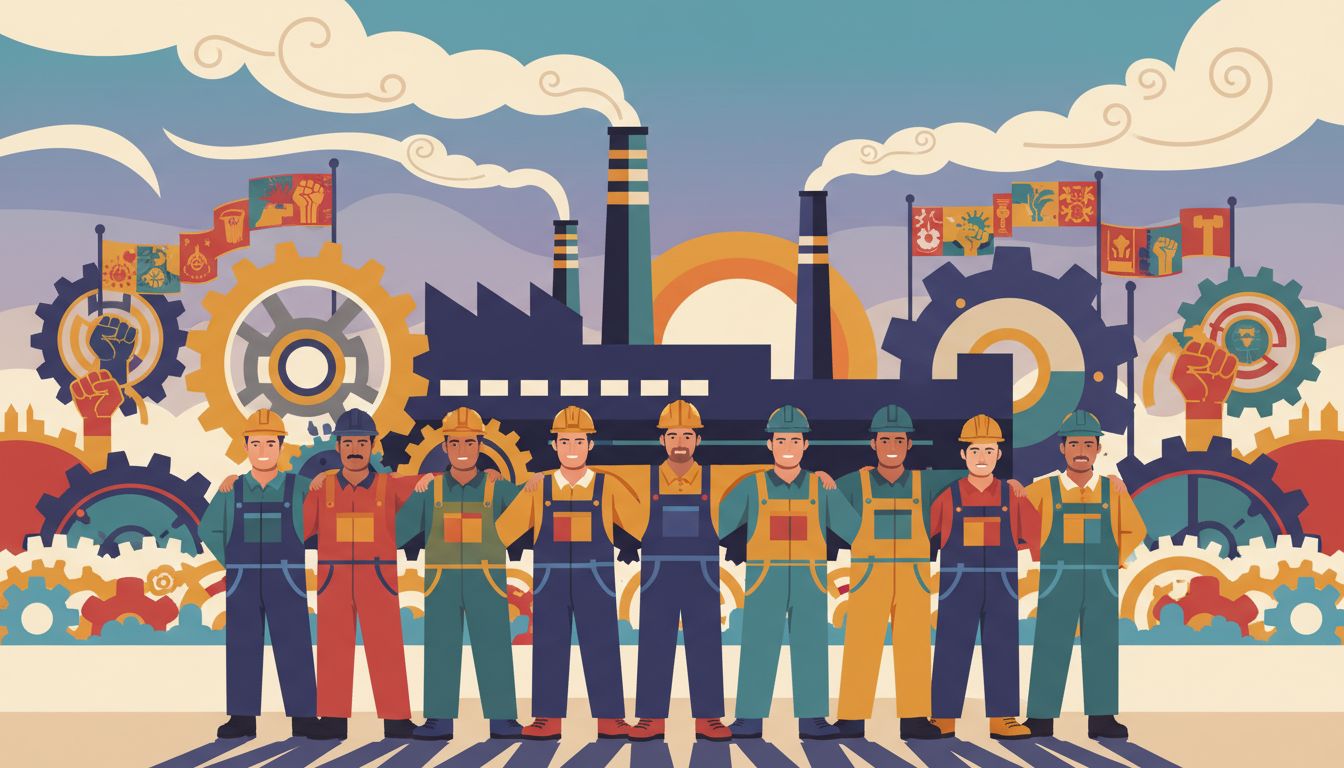
What Is #IndustrialWorkersOfTheWorld?
#IndustrialWorkersOfTheWorld and #IWW reference the Industrial Workers of the World, a labor union founded in Chicago in 1905. The IWW took a different approach from the trade unions of its era - instead of organizing workers by specific craft or skill, it aimed to unite all workers into one big union regardless of industry, trade, or skill level. The founders believed that workers had more in common with each other than they ever would with their employers, and the organizational structure reflected that philosophy.
Known as the Wobblies (the origin of the nickname is debated, and nobody has settled it definitively), the IWW played a significant role in early 20th century labor struggles. They organized textile workers in Lawrence, Massachusetts in 1912, led free speech fights across the West, and pushed for the eight-hour workday, safer conditions, and fair wages in mining, logging, agriculture, and manufacturing. The union faced serious government repression during World War I and the Red Scare, but it survived and still operates today as a functioning labor organization.
The IWW stands out from other unions because of its structure and philosophy. It accepts all workers as members, including those traditionally excluded by mainstream unions - immigrant workers, women, people of color, and gig workers. That inclusive approach was radical in 1905, and it continues to attract attention in modern labor discussions as new categories of work emerge.
Who Uses These Hashtags?
Labor organizers and union members drive the core conversation. Current IWW members share updates about organizing drives, workplace actions, and solidarity campaigns. The union has active chapters across the United States, Canada, the United Kingdom, and Australia, so the hashtag carries an international presence.
Labor historians and academics post on significant dates - the anniversary of the founding on June 27th, the Lawrence Textile Strike anniversary, May Day, and International Workers Memorial Day. Their content tends toward historical photos, document scans, and threads explaining the context behind key events in IWW history.
Political accounts and activists use #IWW when discussing workers rights, unionization efforts, wage inequality, and labor policy. The hashtag appears in conversations about Amazon warehouse organizing, fast food worker campaigns, gig economy labor issues, and teacher strikes. Even when the IWW itself is not directly involved, the hashtag gets pulled into broader labor solidarity posts.
Artists and musicians reference the IWW connection to protest music and labor art. The union produced iconic songs like "Solidarity Forever" and published the Little Red Songbook, which influenced folk and protest music for decades. Accounts focused on folk music history, political art, or graphic design regularly share IWW poster art and song lyrics.
Content Ideas for #IndustrialWorkersOfTheWorld
Historical deep dives perform well with this audience. Pick one event from IWW history and tell the story with context - the Bread and Roses strike, the Everett Massacre, the trial of Joe Hill, or the Centralia Tragedy. These stories are dramatic and largely unknown outside labor history circles, so there is genuine educational value in sharing them.
If you are involved in current labor organizing, share what the process actually looks like. The day-to-day reality of building workplace solidarity, having conversations with coworkers, and navigating labor law is far more nuanced than most people realize. Practical content about how organizing works gets shared widely.
Book and media recommendations connect well here. There is a rich library of labor history writing - from Philip Foner's multi-volume history of the IWW to newer works on gig economy organizing. Recommending specific titles with brief reviews gives your audience something actionable.
Solidarity posts on relevant dates get strong engagement. May Day, Labor Day, the IWW founding anniversary, and dates tied to specific labor actions all provide natural posting opportunities. A simple graphic with a historical photo and a few lines of context can carry significant reach within labor and progressive communities.
Best Hashtag Combinations
Pair #IndustrialWorkersOfTheWorld with #IWW since both versions circulate. Add #LaborMovement and #WorkersRights to reach the broader labor audience. #UnionStrong and #Solidarity connect to current organizing conversations across all unions, not just the IWW.
For historical content, include #LaborHistory and #ThisDayInHistory when posting about specific events. #Wobblies works as an additional tag that fans of the union recognize immediately. On May Day, add #MayDay and #InternationalWorkersDay to join one of the largest annual labor hashtag events.
If your content focuses on current organizing, #OrganizeYourWorkplace and #UnionizeNow tie into active campaigns. Keep your hashtag count focused - 5 to 10 relevant tags outperform 30 generic ones. The labor community on social media is engaged but relatively niche, so precision in your tag choices matters more than volume.