#SaunteringDay
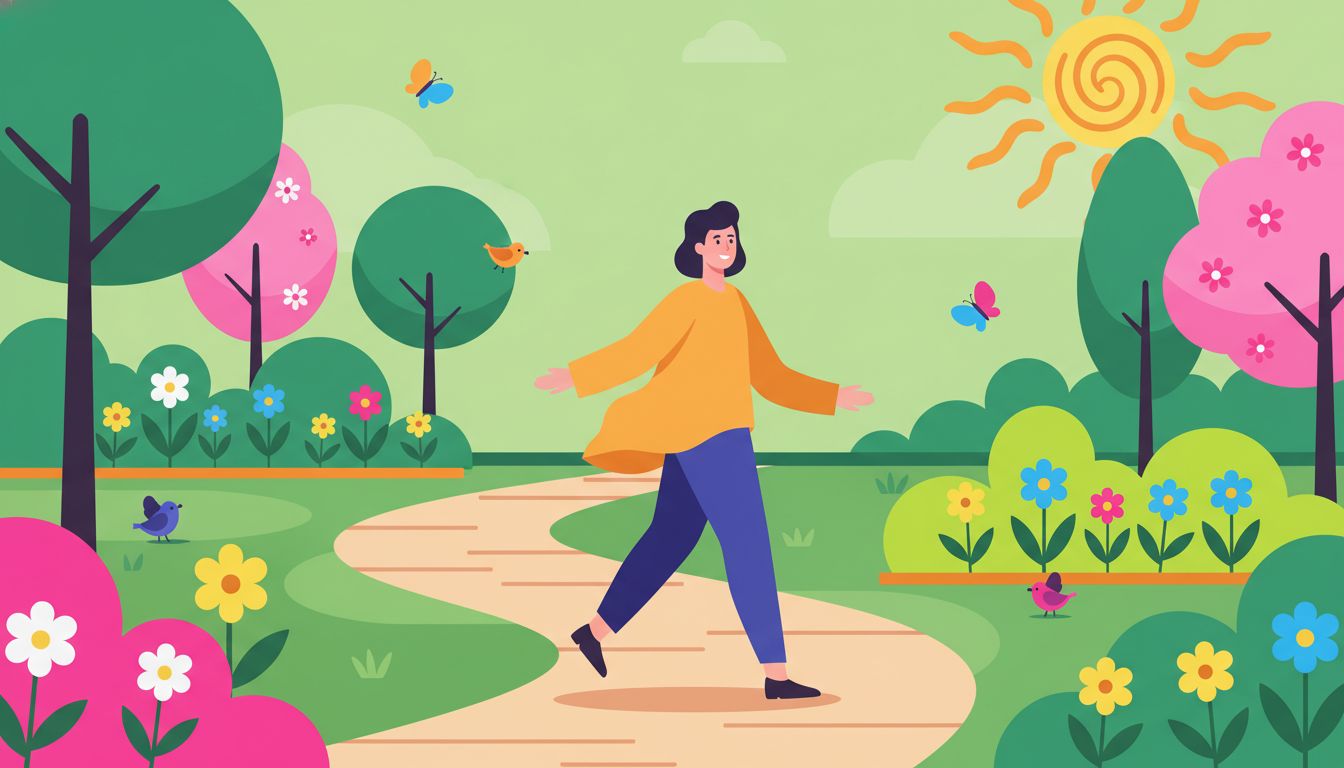
Take a moment to slow down and saunter around for World Sauntering Day.
What Does #SaunteringDay Mean?
World Sauntering Day on June 19th encourages everyone to slow down and take a leisurely stroll instead of rushing through life. It was created as a response to the jogging craze and reminds us that there is value in moving at your own unhurried pace.
How to Use #SaunteringDay
Post a photo from a slow walk through your neighborhood, park, or city. Share your thoughts on slowing down and enjoying the moment.
The Art of the Saunter: Why Slowing Down Changes Everything
In a world obsessed with speed - faster commutes, quicker workouts, shorter attention spans - World Sauntering Day asks you to do something radical. Just walk slowly. No destination. No timer. No podcast drowning out the birds. Celebrated every June 19th, this day is a gentle rebellion against the idea that you always need to be going somewhere fast.
How Sauntering Day Started
World Sauntering Day was created in 1979 by W.T. Rabe at the Grand Hotel on Mackinac Island, Michigan. It was a direct response to the jogging craze sweeping America at the time. While everyone was sprinting through parks in short shorts, Rabe suggested a counter-movement: walking without purpose, without urgency, and without checking your watch.
The word "saunter" itself has debated origins. Some trace it to French pilgrims heading to the Sainte Terre (Holy Land), walking with no rush because the journey was the point. Henry David Thoreau loved that etymology. Others say it comes from wandering beggars who roamed the countryside. Either way, it means moving with intention but without hurry.
The Science of Slow Walking
- Reduces cortisol levels by up to 16% compared to brisk walking
- Activates the parasympathetic nervous system, lowering heart rate and blood pressure
- Improves creative thinking - Stanford found walking boosts creative output by 60%
- Better balance and joint health than power walking for older adults
How to Actually Saunter
- Leave your phone in your pocket (or better yet, at home)
- Walk at half your normal pace - it will feel weird at first
- Take a route you have never walked before
- Stop whenever something catches your eye - a garden, a building, a cloud
- No step counter. The whole point is that the numbers do not matter today.
Famous Saunterers Throughout History
Charles Dickens walked 12 miles a night through London streets, observing the city that fueled his novels. He called walking his "magic lantern."
Henry David Thoreau spent four or more hours walking daily and wrote that he could not preserve his health without at least that much sauntering.
Nassim Nicholas Taleb credits his best ideas to long, aimless walks through cities rather than sitting at a desk.
The flâneur tradition in 19th-century Paris celebrated the art of strolling and people-watching as a legitimate intellectual pursuit.
Social Media Strategy for #SaunteringDay
Best Content Types
- - Slow-motion video of your walk (15-30 seconds)
- - Before/after: your rushed morning vs. your saunter
- - Photo series of things you noticed walking slowly
- - Time-lapse of a scenic route at sunset
Caption Ideas
- - "No destination. No deadline. Just walking."
- - "Turns out the best things are between Point A and Point B."
- - "Moving slowly enough to actually see the world today."
- - "My only plan is to have no plan."
Related Hashtags to Pair With
Quick Info
-
Hashtag#SaunteringDay
-
When to PostJune 19th
-
Full GuideAvailable below
Related Hashtags
Find More Hashtags
Search across 830+ curated hashtags