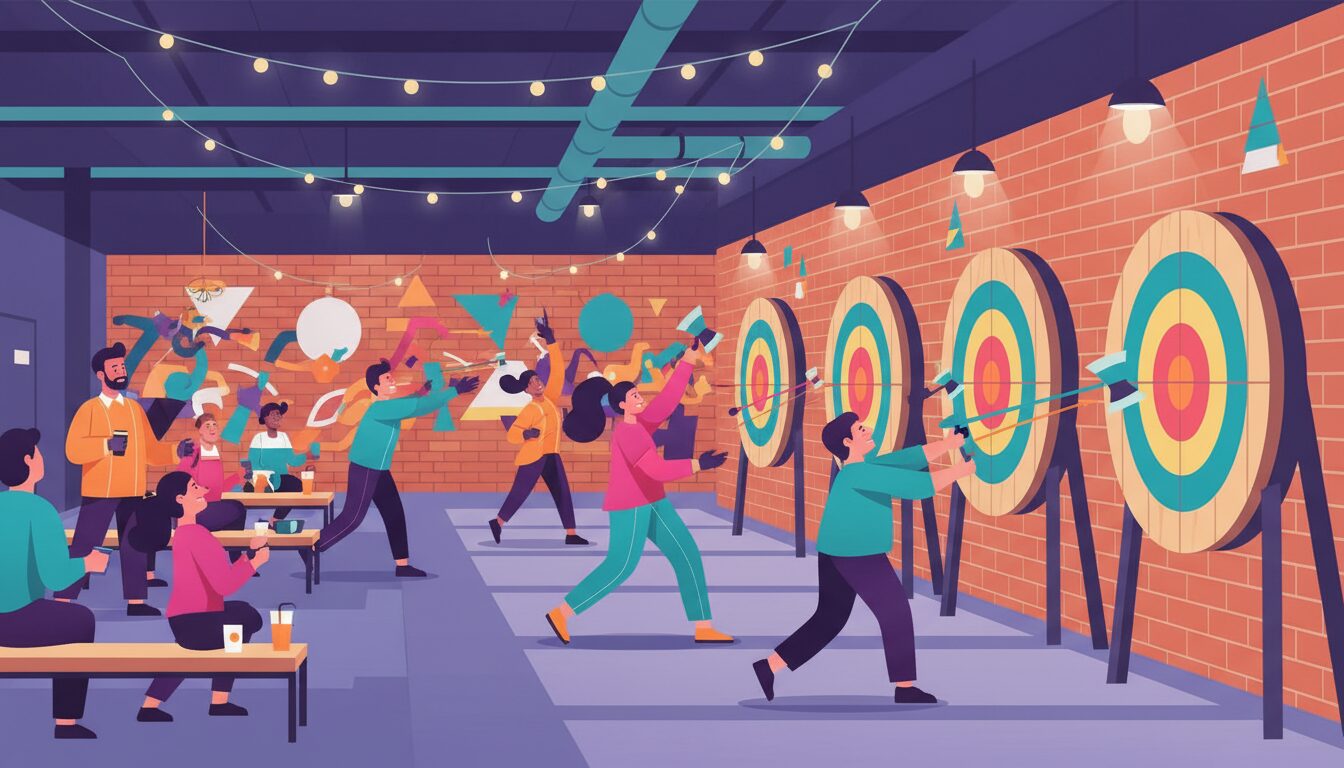
From Lumberjack Camps to Friday Night Plans
Axe throwing has one of the weirdest origin stories in recreational sports. For centuries, it was a practical skill - loggers, soldiers, and frontiersmen threw axes because they needed to. Competition throwing started in Canadian logging camps where bored workers would challenge each other during downtime. Fast forward to the 2010s, and suddenly there are axe throwing bars in strip malls across North America.
The modern axe throwing boom traces back to 2006, when Matt Wilson opened the Backyard Axe Throwing League (BATL) in Toronto. What started as a backyard hobby grew into a franchise, and competitors quickly followed. By 2018, there were over 2,000 axe throwing venues worldwide, and the World Axe Throwing League (WATL) was hosting televised championships.
International Axe Throwing Day on June 13th celebrates the sport at its most accessible - not the competition circuit, but the experience of picking up a hatchet for the first time and discovering that sinking a bullseye feels unreasonably satisfying.
The Physics of a Good Throw
Here's what most first-timers get wrong: they think power matters. It doesn't. Axe throwing is about rotation and distance, not strength. A standard hatchet needs to make exactly one full rotation between your hand and the target, which is set at about 12 feet away.
The technique is simpler than it looks. Hold the axe with both hands behind your head, step forward with your dominant foot, and release when your arms reach eye level. Don't flick your wrists - that adds unpredictable spin. The axe should leave your hands cleanly, like you're throwing a basketball chest pass but overhead.
Most venues use a scoring system similar to archery: the bullseye (center circle) is worth the most points, with rings of decreasing value radiating outward. Some targets have small "kill shot" dots in the corners worth bonus points - hit those and everyone in the lane will hear about it.
The Business Behind the Boom
Axe throwing venues have become a significant part of the entertainment industry. The average session costs $25-40 per person for an hour, and venues often combine throwing with food, drinks, and league nights. Many have found that corporate team-building events are their biggest revenue driver - turns out, throwing sharp objects with your coworkers is a bonding experience.
The industry took a hit during COVID shutdowns but bounced back stronger. People were hungry for in-person activities that felt different from the usual dinner-and-a-movie routine. Axe throwing fit the bill perfectly - it's physical, slightly dangerous-feeling (though statistically very safe), and makes for great social media content.
Social Media Strategy Cards
Action Shot Content
Film your throw in slow motion - the rotation of the axe and the moment it sticks in the target is mesmerizing content. Bullseye reactions are gold for Reels and TikTok. Use #InternationalAxeThrowingDay #AxeThrowingDay #Bullseye
Group Outing Post
Tag the venue and your crew. Group photos at the lanes perform well because they show the vibe - competitive but fun. Birthday parties and team outings make especially shareable content. Use #AxeThrowingDay #GroupNightOut #TeamBuilding
First-Timer Tips
Share a quick tutorial or tips you learned. "Things I wish I knew before my first axe throw" works as a carousel or short video. People searching for the hashtag are often considering trying it. Use #AxeThrowingDay #AxeThrowing #FirstTimer
Venue Spotlight
Review your local axe throwing venue - the atmosphere, coaching quality, and food/drink options. Venue owners will likely reshare, expanding your reach. Use #InternationalAxeThrowingDay #AxeThrowing #LocalFun
Safety Is Actually the Boring Part
Despite what your mom thinks, axe throwing is remarkably safe. Every reputable venue has trained coaches, enclosed lanes with chain-link or wooden barriers, and strict rules about when you can approach the target. The axes are sharp enough to stick but not heavy enough to cause the kind of mayhem people imagine.
The biggest risk? A bounced axe - when the blade hits the target flat and bounces back. That's why there's a line you stand behind, and why coaches emphasize technique over power. Proper rotation means the blade hits edge-first and sticks. Muscling it causes flat hits and bounces.
So on June 13th, grab some friends and find a local venue. Or if you've already got a backyard setup (and understanding neighbors), celebrate with some target practice. Either way, #InternationalAxeThrowingDay is your excuse to try something most people only think about doing.