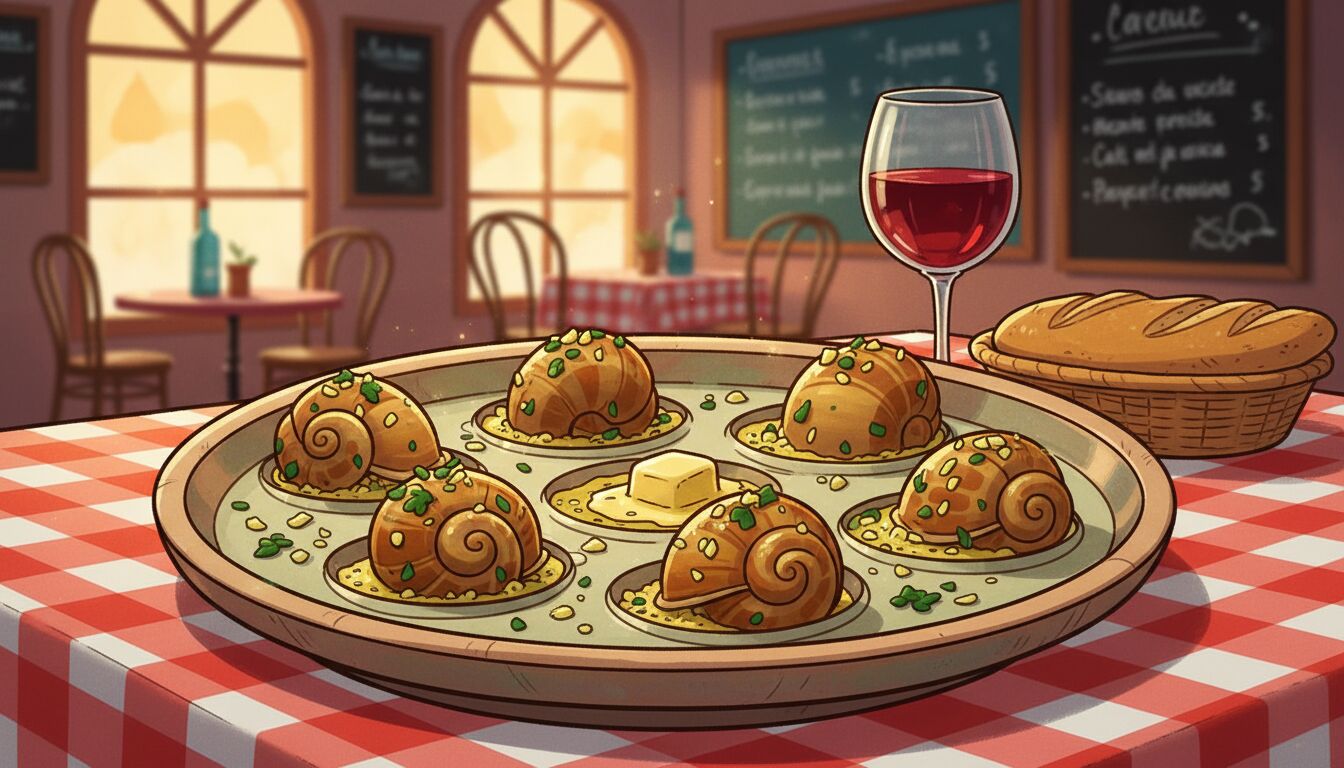
National Escargot Day: A Brief History of Eating Snails on Purpose
May 24 is National Escargot Day, which means somewhere a chef is carefully placing six garlic-butter snails into a dimpled ceramic dish while a first-timer at the next table tries to figure out if they're actually going through with this. Escargot inspires that kind of hesitation. It is simultaneously one of the simplest and most psychologically challenging dishes in French cuisine.
Humans have eaten snails for a very long time. Archaeological sites in Spain contain roasted snail shells dating back 30,000 years, making escargot one of the oldest prepared foods we know about. The Romans farmed snails deliberately, fattening them on milk and grain in enclosures called cochlearia. Pliny the Elder wrote about snail cultivation as if it were perfectly routine, because for Romans, it was.
The French Connection
France turned snails into a cultural institution. The dish we recognize today - Helix pomatia snails baked in garlic butter with parsley - was popularized in the early 1800s when chef Marie-Antoine Careme served them to Tsar Alexander I at a diplomatic dinner. The Tsar loved them. The dish became fashionable overnight. French restaurants have kept it on menus ever since, and the country now consumes roughly 30,000 tons of snails annually.
Most of those snails are actually imported. Wild French snails can't keep up with demand, so Turkey, Greece, and Eastern Europe supply the bulk of the market. Burgundy snails - the classic variety - are now relatively rare in the wild and are increasingly farm-raised. Snail farming, called heliciculture, has become a legitimate agricultural niche with trade associations and everything.
Beyond Butter and Garlic
The traditional preparation is hard to beat, but escargot has evolved. Spanish restaurants serve snails in spicy tomato sauce. Portuguese cooks simmer them with beer and herbs as a bar snack called caracois. In Morocco, street vendors sell cups of snails in a warm, cumin-laced broth. Vietnamese cuisine features snails in lemongrass and chili. The garlic-butter version is just the French take on a food that shows up across dozens of culinary traditions.
Modern chefs have pushed it further. You can find escargot on pizza, stuffed into ravioli, served on crostini, or paired with mushroom risotto. The flavor itself is mild and earthy - somewhere between mushroom and clam. The texture is pleasantly chewy. Most people who try it admit it tastes much better than the concept sounds.
Content Ideas for Your Feed
Post a photo of escargot - the traditional ceramic dish with the little wells is instantly recognizable. Share a first-time reaction video if you're trying it for the first time. Post a recipe for garlic-butter escargot, which is genuinely simple to make at home with canned snails from a specialty store. Share a surprising fact, like how snails have been eaten for 30,000 years or that a single snail has around 20,000 teeth. Or take the comedy angle and post about trying to convince someone else to eat one. The reactions are always good content.