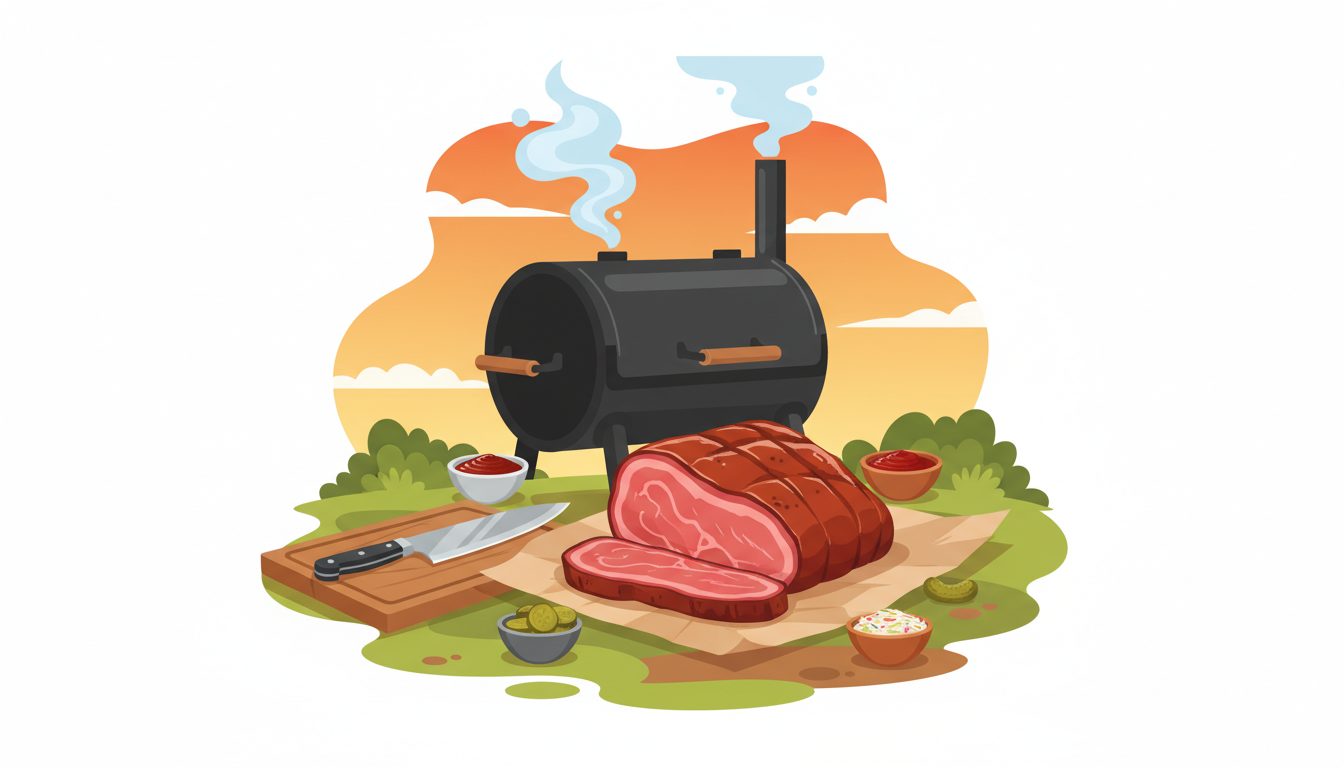
The Story of Brisket
Brisket comes from the chest of the cow - a hardworking muscle that supports about 60% of the animal’s body weight. All that work makes it tough and full of connective tissue, which is exactly why it needs hours of low and slow cooking to break down into something tender. When done right, the collagen melts into gelatin and the meat practically falls apart.
Brisket has deep roots in multiple culinary traditions. Eastern European Jewish immigrants brought braised brisket to America, cooking it with onions and root vegetables for holiday meals. Texas barbecue culture turned it into a smoked masterpiece rubbed with salt and pepper and cooked over post oak for 12 to 18 hours. Both traditions share the same principle - patience turns a cheap cut into something extraordinary.
What Makes Great Brisket
A whole packer brisket has two parts. The flat is the leaner section, and the point is the fattier, more marbled piece on top. Competition pitmasters and backyard cooks argue endlessly about which part is better, but the answer depends on what you are after. The flat slices clean and looks great on a plate. The point is juicier and more forgiving if your timing is off.
Temperature control matters more than anything else. Most pitmasters cook between 225 and 275 degrees Fahrenheit. The stall - that frustrating period around 150 to 170 degrees where the internal temp seems to stop rising for hours - is where many beginners panic. The Texas crutch method wraps the brisket in butcher paper or foil to push through the stall faster, though purists will tell you unwrapped is the only way.
Beyond Texas BBQ
Brisket is not just a Texas thing. Korean cuisine uses brisket in dishes like chadolbaegi, where it is sliced paper-thin and cooked on a hot grill at the table. Vietnamese pho often features brisket simmered in star anise and cinnamon-scented broth. Montreal smoked meat starts with a brisket cured in a spice blend and then smoked, giving it a completely different character than what you find in Austin or Lockhart.
Braised brisket remains a staple in Jewish cooking, especially for Rosh Hashanah and Passover. The meat cooks in a sauce with onions, garlic, and sometimes dried fruit until it is fork-tender. It is comfort food at its most fundamental - simple ingredients, long cooking time, incredible result.
Content Ideas for National Brisket Day
- Document a full brisket cook from trimming to slicing - time-lapse videos do especially well
- Compare different brisket styles side by side: Texas smoked vs braised vs Montreal smoked meat
- Share your go-to rub recipe or seasoning approach
- Post the cross-section money shot showing the smoke ring and bark
- Create a beginner’s guide to buying brisket - what grade, what size, where to find it
- Interview a local pitmaster about their technique and what they have learned over the years