World Amateur Radio Day: The Global Network That Never Goes Down
When a hurricane knocks out cell towers and internet cables, when floods swamp an entire region and phone networks go silent, there is one communication system that keeps working. Amateur radio operators — ham radio enthusiasts — fire up their equipment and become the lifeline between disaster zones and the outside world. World Amateur Radio Day on April 18th honors this global community of operators who keep the airwaves alive.
What Is Amateur Radio, Exactly?
Amateur radio is a licensed radio service that allows individuals to communicate with other operators around the world using designated radio frequencies. Unlike commercial radio or CB radio, ham radio operators go through testing and licensing, which gives them access to a wide range of frequencies and communication modes — from traditional voice conversations to digital data transmission, Morse code, satellite communication, and even bouncing signals off the moon.
There are roughly 3 million licensed amateur radio operators worldwide. Some use massive antenna arrays that reach across continents. Others work with handheld radios that fit in a pocket. The common thread is curiosity about radio technology and a willingness to learn how it all works.
A Brief History
Amateur radio traces back to the early 1900s, when hobbyists began experimenting with radio transmissions shortly after Marconi sent the first transatlantic signal in 1901. By the 1910s, amateur operators were numerous enough that the U.S. government started requiring licenses. The International Amateur Radio Union (IARU) was founded in 1925, and World Amateur Radio Day has been observed on April 18th since 1925 to mark that founding.
During both World Wars, amateur operators contributed their skills to military communications. After each war, they returned to their hobby with new technical knowledge, pushing the boundaries of what radio could do.
Why Ham Radio Still Matters
In an age of smartphones and instant messaging, ham radio might sound like a relic. But it fills a role nothing else can. During Hurricane Maria in Puerto Rico in 2017, amateur radio was the only way many communities could reach emergency services. After earthquakes in Japan, Nepal, and Turkey, ham operators provided critical coordination when all other systems failed.
Beyond emergencies, amateur radio is a hands-on education in electronics, physics, and communication protocols. Many engineers and scientists trace their careers back to tinkering with radio equipment as teenagers. And the social side is real — operators regularly chat with people on the other side of the planet, no internet required.
Content Ideas for Social Media
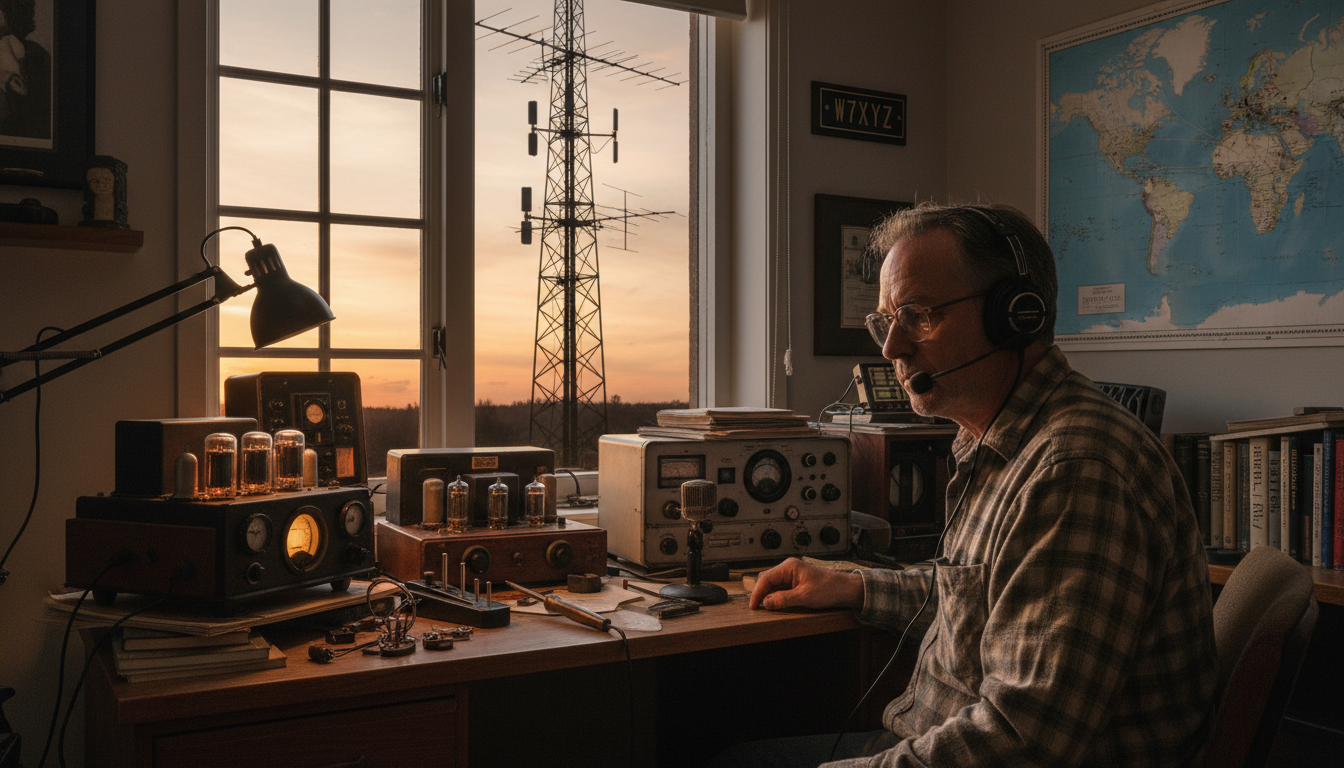
Show your setup. Ham radio stations range from elaborate shacks with multiple rigs and towering antennas to portable kits that fit in a backpack. People love seeing the gear. Post a photo of your station with details about what equipment you use and how far you have reached.
Share a contact story. Every ham operator has a memorable contact — talking to someone in Antarctica, reaching the International Space Station, or connecting with a stranger in a country they had never heard of. These stories are genuinely fascinating to non-operators too.
Explain the basics. Most people have no idea what amateur radio is or how to get started. A short explainer post or video can reach an audience that is curious but has never been exposed to the hobby. Cover what a license costs, what the test involves, and what you can do once you have your callsign.
Post your QSL cards. QSL cards are physical postcards exchanged between operators to confirm a successful contact. They are often beautifully designed and make for great visual content. Lay out a collection and photograph it.
Emergency preparedness angle. Position amateur radio as part of a practical emergency preparedness plan. This resonates with a broad audience beyond just radio enthusiasts.
Which Hashtags to Use
Lead with #WorldAmateurRadioDay or #AmateurRadioDay on April 18th for maximum visibility. Add #AmateurRadio and #HamRadio for the year-round community. #WARD is used by some operators but is less searchable. Pair these with broader tags like #EmergencyPreparedness, #STEM, or #RadioCommunication to reach beyond the ham radio bubble.
Platform Tips
Instagram and Facebook work well for gear photos and station tours. YouTube is the best platform for ham radio content — setup walkthroughs, contact recordings, and antenna building tutorials all perform well. X (Twitter) is popular among operators for quick updates and DX alerts. Reddit has active communities at r/amateurradio and r/HamRadio where sharing your experiences gets genuine engagement.
The amateur radio community is welcoming to newcomers. Whether you are a licensed operator sharing your latest project or someone who just learned ham radio exists, World Amateur Radio Day is the right moment to join the conversation.